Dangote Eyes $17B Mega-Refinery in East Africa to Replicate Lagos Success????????????
Aliko Dangote wants to replicate the success of his massive Lagos refinery in East Africa by building another 650,000 barrels-per-day (bpd) mega-refinery, likely costing $15–$17 billion. The goal is to help East African countries stop depending on imported refined fuel and instead process oil regionally. This is bigger than just “building another refinery.” It’s a […]
 Black News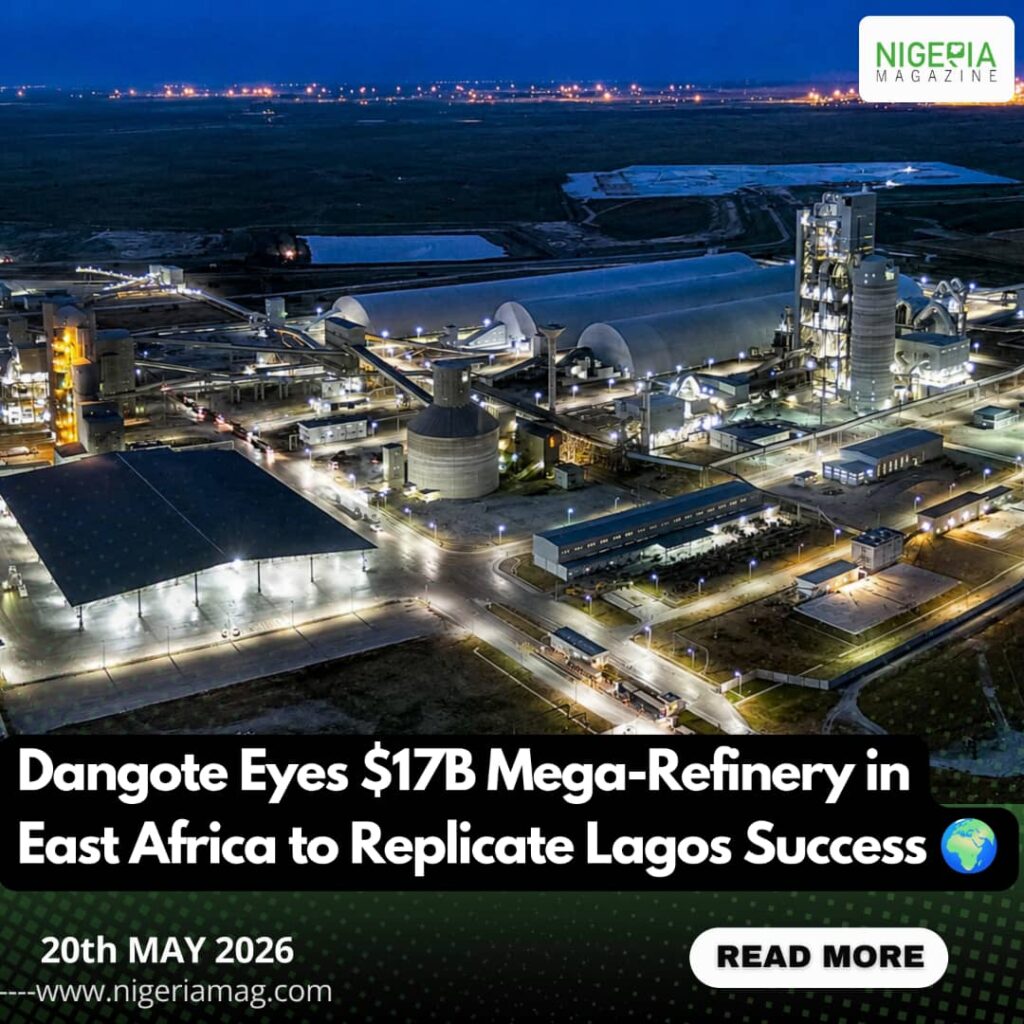
Aliko Dangote wants to replicate the success of his massive Lagos refinery in East Africa by building another 650,000 barrels-per-day (bpd) mega-refinery, likely costing $15–$17 billion. The goal is to help East African countries stop depending on imported refined fuel and instead process oil regionally.
This is bigger than just “building another refinery.” It’s a strategic play for:
Energy dominance in Africa
Control of fuel supply chains
Regional political influence
Expansion of the Dangote industrial empire
Why Dangote is doing this
He proved the model works in Nigeria
Dangote’s Lekki refinery in Lagos is now operating at full capacity (650,000 bpd), making it the world’s largest single-train refinery. It has started supplying Nigeria and exporting fuel across Africa and beyond.
That refinery has already:
Reduced Nigeria’s dependence on fuel imports
Increased Dangote’s political and economic influence
Made him a major fuel exporter to African countries
Positioned him as a continental energy player
Now he wants to copy-paste that success into East Africa.
East Africa imports almost all its refined fuel
This is the key opportunity.
Countries like:
Kenya
Tanzania
Uganda
South Sudan
Democratic Republic of the Congo
…still rely heavily on imported petrol and diesel, mostly from the Middle East. That makes them vulnerable to:
Fuel price spikes
Shipping disruptions
Currency pressure
Supply insecurity
Dangote sees a massive gap: build local refining capacity and become East Africa’s energy backbone.
What exactly is the plan?
A 650,000 bpd mega-refinery
Dangote has said he wants to build a refinery the same size as his Nigerian refinery:
Capacity: 650,000 barrels/day
Estimated cost: $15–17 billion
Timeline: 4–5 years
Funding: likely a mix of Dangote capital + regional investors + government support
Where will it be built?
This is where the story gets interesting.
Phase 1: Tanzania (Tanga)
Initially, discussions centered on Tanga, a port city in Tanga.
Why Tanga?
It’s linked to the East African Crude Oil Pipeline (EACOP), which will transport Ugandan oil to Tanzania.
Easy access to regional crude supply.
Regional leaders discussed a joint refinery project there. (Reuters)
But then politics complicated things.
Tanzanian President Samia Suluhu Hassan reportedly said she had not been properly consulted after Kenya announced the project publicly. That created diplomatic tension.
Phase 2: Kenya (Mombasa) — now the leading option
Dangote is now reportedly leaning toward Mombasa, Kenya.
Why Mombasa?
Bigger and deeper port
Easier crude shipping access
Larger local fuel demand
Kenya has the biggest economy in East Africa
Dangote reportedly said:
“I’m leaning more towards Mombasa because Mombasa has a much larger, deeper port. Kenyans consume more.”
He also said:
“The ball is in the hands of President Ruto.”
Meaning: if Kenyan President William Ruto offers:
Land
Policy support
Investor backing
Protection from cheap imported fuel dumping
…Dangote may choose Kenya.
Why this matters geopolitically
This isn’t just business.
Dangote could reshape Africa’s fuel map.
If successful:
Nigeria becomes West Africa’s refining hub
Through the existing Dangote refinery.
Kenya (or Tanzania) becomes East Africa’s refining hub
Through the new refinery.
That would give Dangote influence across both coasts of Africa.
Strategic motivations beyond fuel
Pan-African industrial influence
Dangote has increasingly positioned himself as someone building African self-sufficiency.
His message:
Africa should stop exporting raw materials and importing finished products.
This refinery fits that narrative.
Supply chain control
Dangote doesn’t just refine oil.
His group also has:
Fertilizer
Petrochemicals
Cement
Plastics inputs
His refinery ecosystem is expanding. He recently partnered with Honeywell to expand petrochemical output.
An East African refinery could become another platform for:
Petrochemicals
Industrial manufacturing
Logistics dominance
Financial power
Dangote is also preparing an IPO for the Nigerian refinery, and Nigeria’s pension regulator has even granted a waiver to let pension funds invest.
A successful East African project could massively increase Dangote Group’s valuation.
Challenges he may face
Financing
$15–17 billion is huge, even for Dangote.
Politics
East African regional politics are delicate:
Kenya vs Tanzania rivalry
National interests
Regulatory approvals
Cheap imported fuel competition
Dangote wants protection from “fuel dumping” from countries like:
Russia
India
Cheap imports could make a local refinery less profitable.
Execution risk
His Lagos refinery faced:
Years of delays
Cost overruns
Supply disputes
Regulatory battles
(He’s currently in another legal fight over fuel import licenses in Nigeria.)
What this could mean for Africa
If Dangote succeeds:
Fuel prices may stabilize regionally
Less reliance on imports.
Energy security improves
Africa becomes less vulnerable to global shocks.
Jobs and industrial growth
Thousands of direct and indirect jobs.
More African industrial confidence
It could inspire more mega-projects.
The real story underneath
Dangote isn’t just building refineries.
He’s trying to build African industrial power—with himself at the center of it.
His Nigeria refinery proved he can do what many thought impossible.
Now he’s asking:
Can that model scale across the continent?
East Africa is his next test.