Keeping the Legacy Moving: Herman Mannings III and the MLK Drum Run
By Sym Posey | The Birmingham Times In a city deeply rooted in the legacy of the Civil Rights Movement, Herman Mannings III found a way to combine remembrance, movement and community into one enduring tradition. Every Martin Luther King Jr. Day weekend, runners, walkers, drummers and families gather in Birmingham for the MLK Day […]
 Black News
By Sym Posey | The Birmingham Times
In a city deeply rooted in the legacy of the Civil Rights Movement, Herman Mannings III found a way to combine remembrance, movement and community into one enduring tradition.
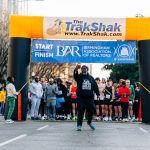
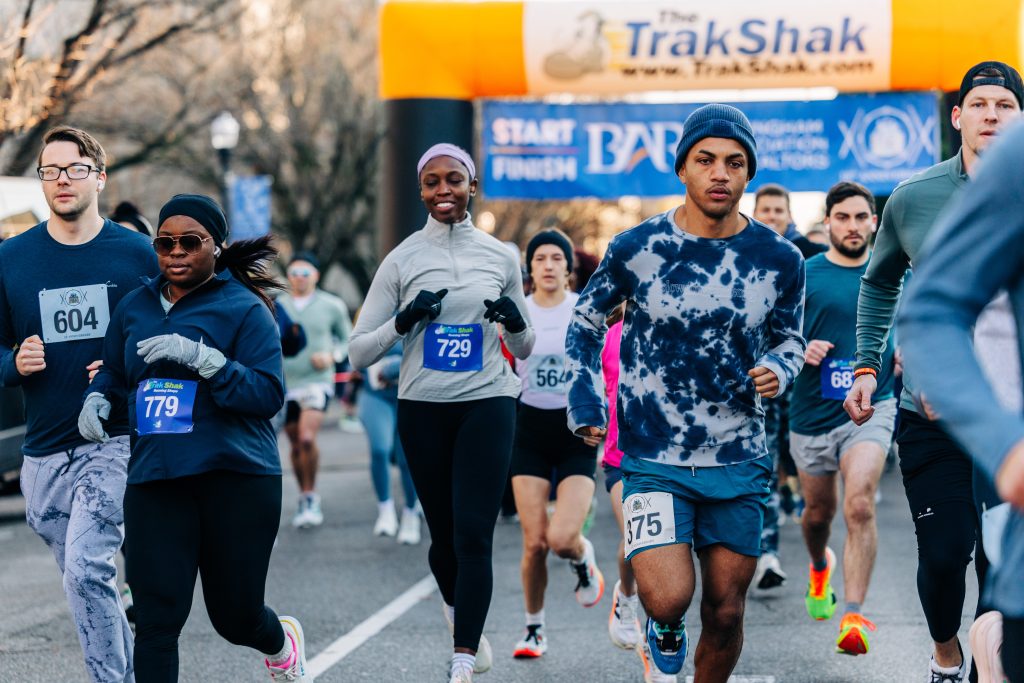
Every Martin Luther King Jr. Day weekend, runners, walkers, drummers and families gather in Birmingham for the MLK Day Drum Run — an annual one-mile, 5K and 10K event honoring Dr. King through “fun and fitness and fellowship,” as Mannings describes it.
But for Mannings, the race has always represented something larger than miles logged or finish lines crossed.
“It was an opportunity to get more people of color involved,” Mannings said. “And also, to help people kind of set goals to start at the beginning of the year with fitness.”
Now serving as the race director, Mannings has spent more than a decade building the Drum Run into one of Birmingham’s most unique Martin Luther King Jr. Day traditions — blending wellness, music, scholarship and cultural remembrance into a single community-centered experience.
“We’re the first one mile, 5K, 10K of the year within the city of Birmingham,” Mannings said.
Bringing the Drum Run Home
The event originally began in Atlanta in 2012, where Mannings and his business partner first launched the concept. After seeing the race’s success there, Mannings knew he wanted to bring it back home to Birmingham.
“It worked well in Atlanta, and I wanted to bring it home to Birmingham, ’cause Birmingham is, the cradle of civil rights.”
For Mannings, Birmingham’s connection to Dr. King’s legacy made the city the natural home for the race.
“Growing up here in Birmingham, it was two major weekends that we pretty much celebrated a lot,” he said. “Of course, one is Magic City Classic weekend and then the Martin Luther King Day weekend.”
As older generations who carried Birmingham’s civil rights history continue to pass on, Mannings, 49, said he feels a responsibility to help preserve that legacy for younger generations.
“A lot of our elders have since transitioned,” he said. “It’s pretty much up to my generation and the generations after to keep the legacy of Dr. King alive here in the city.”
That sense of responsibility is deeply personal for Mannings, who grew up in Birmingham’s Bush Hills community and attended Holy Family Elementary School before graduating from A.H. Parker High School in 1994.
“I grew up under Reverend Abraham Lincoln Woods Jr.,” Mannings said. “He pretty much drilled in this, you know what I mean, so that we won’t forget our history and where we came from.”
As a member of St. Joseph Missionary Baptist Church, Mannings said Woods encouraged young people in the church to stay connected to Birmingham’s civil rights legacy through community involvement and education.
“When I left Birmingham to go to Morehouse [College], Reverend Woods told me, ‘Don’t forget about Birmingham, and always remember Birmingham, and bring something back to Birmingham,’” Mannings recalled.
Years later, bringing the Drum Run home became part of fulfilling that promise.
“That was one of the real factors of one of the reasons why I brought the race back to Birmingham,” he said.
More Than a Race
The event itself feels part race, part celebration.
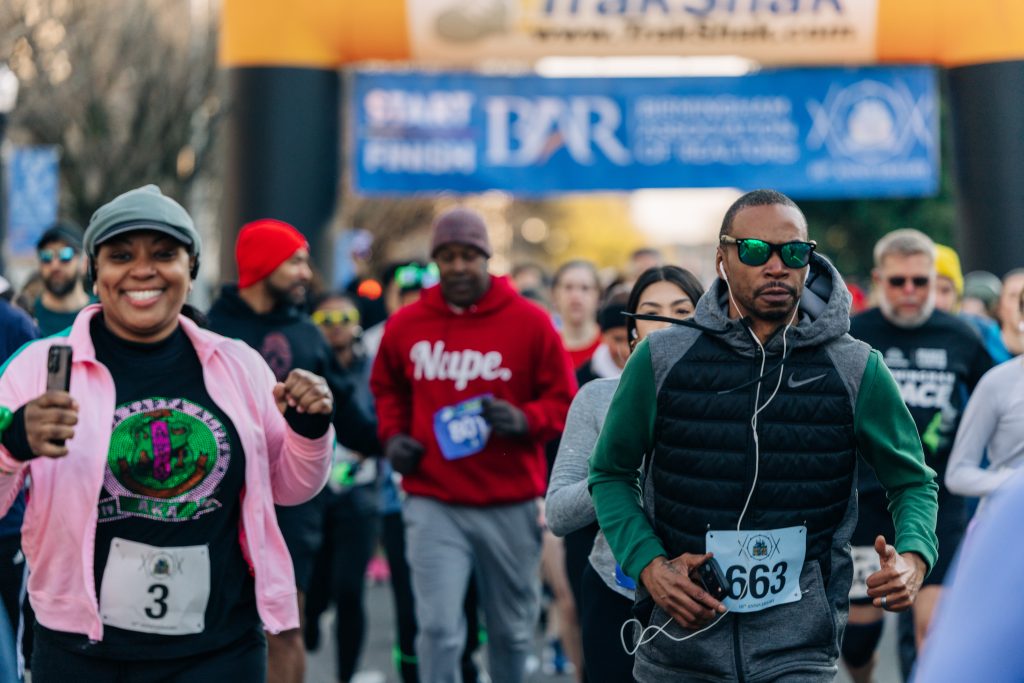
Participants arrive early on race morning, gathering for music, speakers and community programming. A DJ energizes the crowd while workout instructor Curtis Starks, owner of Training Burn, leads warmups before runners take to the streets.
But what separates the Drum Run from a typical road race is the music.
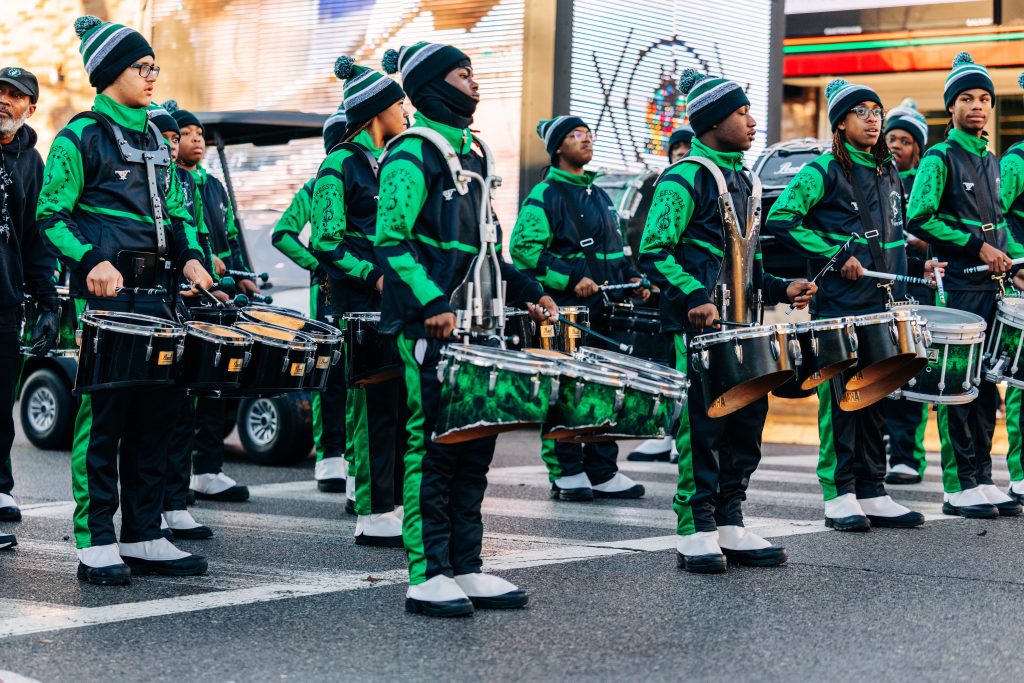
“The drum lines were put there,” Mannings explained, “kind of reminds you, like, a reverse parade type situation.”
As runners move through the course, live drumlines perform along the route, creating an atmosphere that feels distinctly Southern, distinctly Black and unmistakably Birmingham.
“Martin Luther King was a drum major for justice,” Mannings said.
That symbolism inspired the event’s signature concept and name.
Over the years, the race has expanded from a single 5K into a one-mile run, 5K and 10K. But even as participation has grown, Mannings said the mission has remained centered on giving back.
“We provide scholarships,” he said.
The scholarships specifically support graduating high school seniors involved in drumlines — another intentional way the event ties athletics, music and youth opportunity together.
“To date, we’ve awarded $44,000 in scholarships,” Mannings said.
In addition to scholarships, participating drumlines also receive direct financial support for their programs.
“We also provide funds to each participating drumline as well,” Mannings said.
The Drum Run later expanded its community outreach efforts even further, eventually incorporating funding for nonprofit organizations and community groups alongside student scholarships.
Running Toward Community and Legacy
Though Mannings organizes one of Birmingham’s signature running events, he laughs at the idea of being considered a runner himself.
“No, I’m not a runner myself,” he said. “I’m a walker.”
Still, he quickly recognized the growing influence of run culture and its potential to create healthier communities.
“One thing I did notice, you know, we were having a rise in the running community,” Mannings said. “People of color.”
That visibility matters, particularly in a sport and fitness culture where Black runners have historically been underrepresented.
For Mannings, the Drum Run became a way to make wellness feel more communal, accessible and culturally connected.
“We’re all about giving back,” he said. “And the way we do it is through fitness and fellowship.”
Outside of the Drum Run, Mannings also operates Leftover Energy LLC, an event management company focused on producing events and providing social responsibility consulting for companies. He also runs Mannings Solutions, a compliance consulting business serving financial service firms.
But despite balancing multiple businesses and splitting time between Birmingham and Atlanta, Mannings said Birmingham remains central to his identity.
“I was born and raised in Bush Hills,” he said.
That connection continues to shape the purpose behind the Drum Run today.
“Our generation is the first generation after segregation,” Mannings said. “So, we have a lot to actually live up to and prove for future generations.”
More than a race, the Drum Run has become an act of remembrance — one that invites Birmingham residents to move together while honoring the city’s past and investing in its future.
For Mannings, that mission remains simple.
“I’m just doing my part,” he said, “hopefully I can be a blessing or an inspiration to the next generation.”
For more information on how to join the fun visit www.mlkday5kbham.com and follow on Facebook and Instagram @mlkday5kbham