Masters of entry and exit: Inside Tony Elumelu and Femi Otedola’s billion-dollar playbooks shaping business in Africa
For much of the past year, Tony Elumelu and Femi Otedola have remained at the centre of some of Nigeria’s biggest corporate transactions, offering entrepreneurs valuable lessons through the similarities and contrasts in their business strategies.
 Black News

For much of the past year, Tony Elumelu and Femi Otedola have remained at the centre of some of Nigeria’s biggest corporate transactions, offering entrepreneurs valuable lessons through the similarities and contrasts in their business strategies.
- Tony Elumelu and Femi Otedola are key figures in Nigeria’s corporate sector, employing contrasting methods to build wealth and influence.
- Elumelu’s approach centers on accumulating and retaining strategic assets across multiple sectors, while Otedola favors entering, restructuring, and exiting businesses to redeploy capital.
- Their philanthropic activities mirror their business methods, with Elumelu supporting broad entrepreneurship and Otedola making targeted, large donations, and both remain highly visible public figures with no clearly stated succession plans.
- Both have significant influence in banking—Elumelu through UBA and Otedola through First HoldCo—using listed companies to expand their reach.
Elumelu, chairman of United Bank for Africa and Transcorp, is preparing to assume the chairmanship of Seplat Energy after Heirs Holdings and Heirs Energies acquired a 20.07% stake in the oil and gas producer.
Otedola, meanwhile, has sold his controlling interest in Geregu Power, increased his investment in First HoldCo and announced plans to redirect part of his capital towards the Dangote Petroleum Refinery.
Their recent moves reveal two contrasting approaches to building wealth and corporate influence.
The Heirs Holdings founder focuses on accumulating strategic assets, retaining long-term control and connecting businesses across banking, power, oil and gas, hospitality, insurance and entrepreneurship.
By contrast, the First HoldCo chairman favours concentration, restructuring and exit, moving capital between industries when a business has matured or a stronger opportunity emerges.
Despite their differences, both seek influence in strategic sectors and present private capital as a driver of national development.
Different starting points
Their business philosophies were shaped by sharply different beginnings.
Femi Otedola was born into one of Nigeria’s prominent families. His father, Michael Otedola, was a businessman and journalist who served as governor of Lagos State from 1992 to 1993.
The younger Otedola began working in his father’s printing business before entering petroleum trading.
In his memoir, Otedola said his father lent him £250,000 to expand Zenon Petroleum, helping establish him as a major figure in Nigeria’s oil industry.
However, that family backing could not shield him from the market shocks. Otedola said the 2008 financial crisis wiped out more than $1.2 billion of his wealth through falling oil prices, naira depreciation, interest costs and the stock market crash.
By contrast, Elumelu began his career as a photocopier salesman before entering banking, rising from an entry-level analyst to branch manager by age 26.
Even so, his career has included significant setbacks, including an unexpected departure as UBA chief executive in 2010, a blocked $2.5 billion oilfield acquisition and production losses linked to crude theft at Heirs Energies.
Two different approaches to capital
Elumelu’s strategy is best described as institutional accumulation.
He built his banking reputation by leading investors who acquired the distressed Crystal Bank in 1997, renamed it Standard Trust Bank and merged it with UBA in 2005.
The merger placed Elumelu at the helm of UBA, which later expanded into 20 African countries and major financial centres, reporting total assets of ₦33.2 trillion ($24.3 billion) in 2025 and a market value of about ₦1.49 trillion ($1.1 billion) in June 2026.
Elumelu left the chief executive role in 2010 under a Central Bank of Nigeria tenure policy.
Rather than dispose of his banking interests, he established Heirs Holdings and expanded into other industries.
His investments now form an interconnected network. UBA provides financial reach, Transcorp offers exposure to power and hospitality, while Heirs Energies holds oil and gas assets.
Meanwhile, Otedola has pursued a more rotational strategy.
He built his early fortune through commodities and petroleum distribution, establishing Zenon Petroleum before taking control of African Petroleum and renaming it Forte Oil.
After restructuring the business and expanding into power generation, he sold his 75% stake in Forte Oil in 2019 for ₦66.25 billion, about $215 million at the time.
His attention subsequently shifted from downstream petroleum distribution to electricity generation through Geregu Power.
In 2025, he sold control of Geregu in a transaction valued at about $750 million.
Otedola said part of the proceeds would be invested in the planned offering of the Dangote refinery.
“That’s one of the reasons why I sold my stake in the Geregu plant to come and invest my proceeds in the IPO of Dangote Refinery,” he said in May.
The sequence captures his approach: enter a strategic sector, restructure the asset, realise value and redeploy capital.
UBA and First Bank: Their banking power bases
Banking is one of the major sectors where their interests converge.
Elumelu’s influence rests on UBA, where he directly and indirectly held about 6.31 billion shares, equivalent to roughly 14.28% of the bank, by the end of 2025.
Otedola approached banking as an investor rather than an executive. He began accumulating shares in FBN Holdings, now First HoldCo, in 2021 and became chairman in January 2024.
By the end of 2025, his direct and indirect holdings had reached about 18.12%, before a further ₦43.4 billion ($31.7 million) share purchase in May 2026.
The distinction is clear: Elumelu rose through banking operations before becoming an owner and chairman, while Otedola built influence through share ownership and boardroom control.
Where their paths crossed
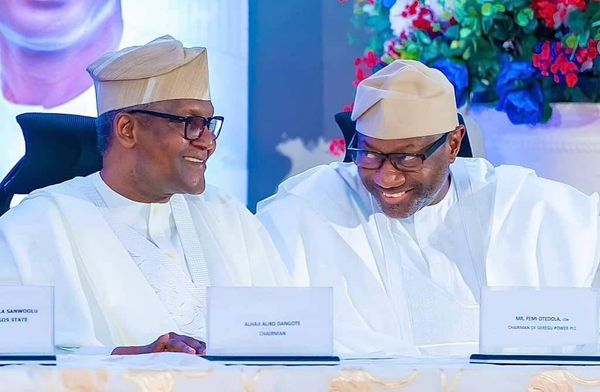
Their business interests briefly overlapped in 2023 when Otedola acquired a 6.3% stake in Transcorp, the conglomerate chaired by Elumelu.
Elumelu publicly welcomed the investment, while Otedola’s entry increased attention on the company’s ownership structure.
Both men later adjusted their positions. Elumelu’s HH Capital increased its holding to 25.58%, or about 9.99 billion shares, while Otedola sold his roughly 6.3% stake, equivalent to about 2.6 billion shares.
Otedola subsequently said he believed in competition but added that “two captains cannot man a ship”.
The episode showed how closely their business instincts overlap and how quickly personal relationships can be tested when control of a strategic company is at stake.
Oil and power: Different directions through the same sectors
Both investors have moved between oil, gas and electricity, but in opposite directions.
The former Forte Oil owner moved from petroleum marketing into power, developing Geregu into a listed electricity company before selling control and preparing to return to oil through the Dangote refinery.
Elumelu entered power through Transcorp’s acquisition of electricity assets, including the Ughelli power plant, before expanding into oil and gas through Heirs Energies.
In late 2025, Heirs Holdings and Heirs Energies acquired Maurel & Prom’s 20.07% stake in Seplat for about $496 million, making the group the company’s largest shareholder, just as Otedola exited Geregu Power in a deal valued at about $750 million.
The timing captured their different playbooks: one was deepening his exposure to oil and gas, while the other was freeing capital for his next investment.
Philosophies shaped by crisis and opportunity
Elumelu describes his economic philosophy as Africapitalism: the belief that Africa’s private sector must make long-term investments that create both profit and social value.
“But what are we as the private sector doing to make things better?” he said in a 2024 interview. “We have the power to make investment decisions.”
His approach favours patient ownership, institution building and investment during periods when difficult economic conditions discourage others.
Otedola’s method is more closely associated with timing, resilience and capital recycling.
His experience during the 2008 financial crisis shaped his willingness to reassess investments, recover from setbacks and move when circumstances change.
Accordingly, his exits from Forte Oil and Geregu reflect a flexible approach to capital allocation. Rather than remain tied to one company, he redirects capital when he identifies a stronger opportunity.
Elumelu emphasises continuity through institutions, while Otedola places greater weight on adaptability and reinvention
Wealth and transparency
Their fortunes are valued differently.
Forbes estimated Otedola’s net worth at $1.3 billion in 2026, based on assets including his First HoldCo stake, remaining interest in Geregu Power, property and other investments.
Elumelu, however, has not received a recent verified valuation from Forbes or the Bloomberg Billionaires Index. Forbes last estimated his wealth at $700 million in 2015.
In January 2026, Nigerian financial publication MoneyCentral valued his wealth at $3.2 billion, based partly on its assessment of his interests in Heirs Energies, UBA, Transcorp and other businesses.
The estimate included privately held interests in banking, energy, real estate and technology, whose values are not always publicly disclosed.
While the figure remains unverified by a major global wealth tracker, the growth of Elumelu’s holdings suggests his fortune is substantially higher than Forbes’ 2015 estimate.
Philanthropy and entrepreneurship
Their philanthropic models also mirror their business philosophies.
The Tony Elumelu Foundation uses a broad model, offering training, mentorship and $5,000 in seed funding to selected African entrepreneurs. The foundation says it has funded more than 24,000 entrepreneurs.
Elumelu calls the model “democratising luck”, a reference to the opportunity he received early in his banking career.
Otedola’s giving has often involved large, targeted interventions. In 2019, he donated N5 billion through the Cuppy Foundation to support children affected by conflict in northern Nigeria.
Elumelu backs large-scale entrepreneurship programmes, while Otedola focuses on substantial donations to selected causes and institutions.
Family, visibility and succession
Family also plays a visible role in their public profiles.
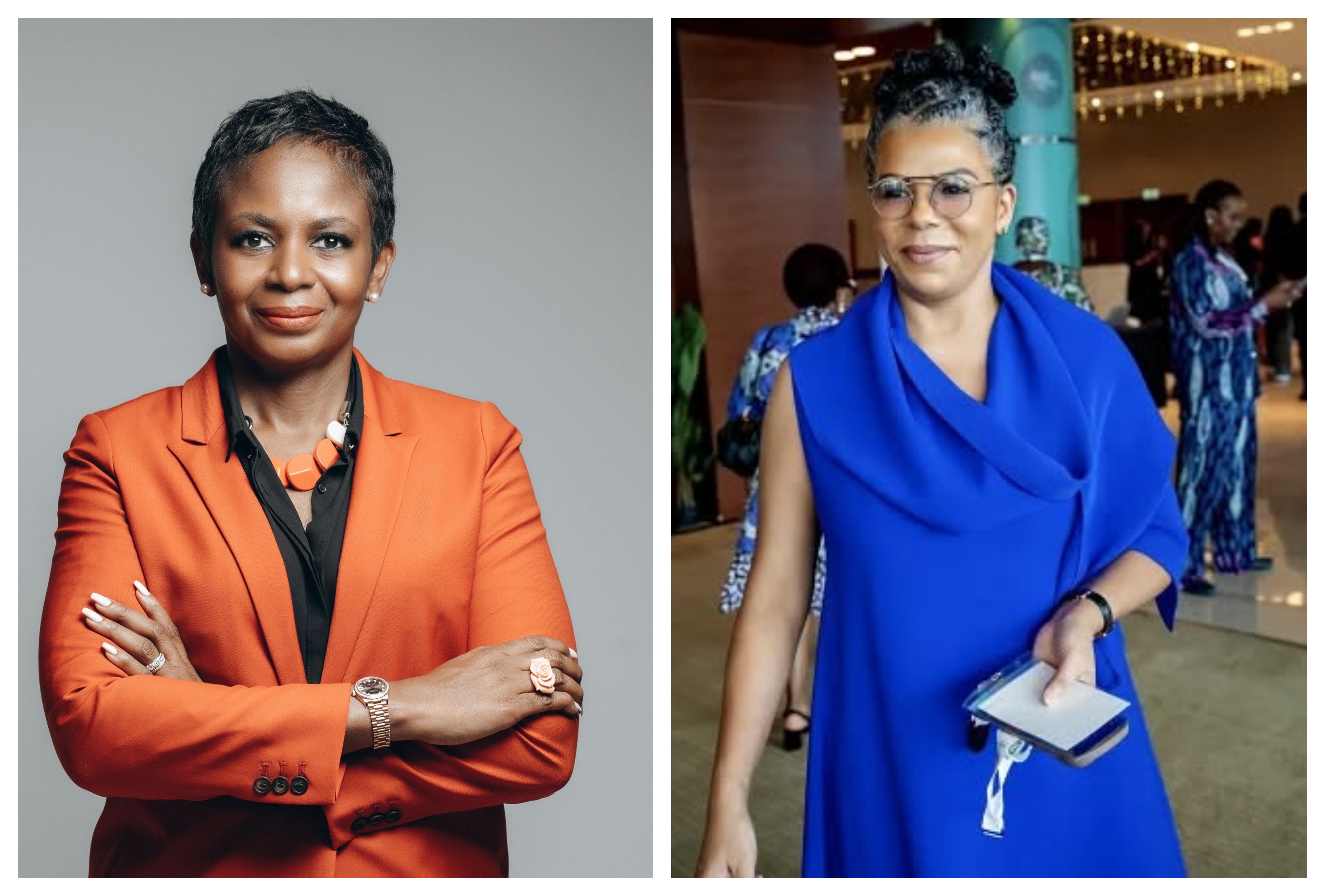
Elumelu’s wife, Awele, is a medical doctor, entrepreneur and co-founder of the Tony Elumelu Foundation. She also chairs Transcorp Hotels, Avon Healthcare and Heirs Insurance Brokers, extending the family’s involvement across hospitality, healthcare and financial services.
Similarly, Otedola’s wife, Nana, is an entrepreneur. She founded Garment Care Ltd, a Lagos-based professional laundry and dry-cleaning company, in 1999.
The visibility of both families, including the public careers and activities of their children, has extended the investors’ influence beyond traditional corporate circles.
However, neither businessman has publicly outlined a detailed succession plan indicating whether family members will eventually assume operational control of their principal companies.
Their major listed businesses remain professionally managed and governed through formal boards.