Nigeria fines 11 Indian sailors and merchant vessel $6 million over cocaine shipment
A Nigerian court has convicted 11 Indian sailors and their merchant vessel for trafficking cocaine through Lagos, imposing financial penalties of about $6 million as Africa’s most populous country steps up enforcement against narcotics moving through its commercial ports.
 Black News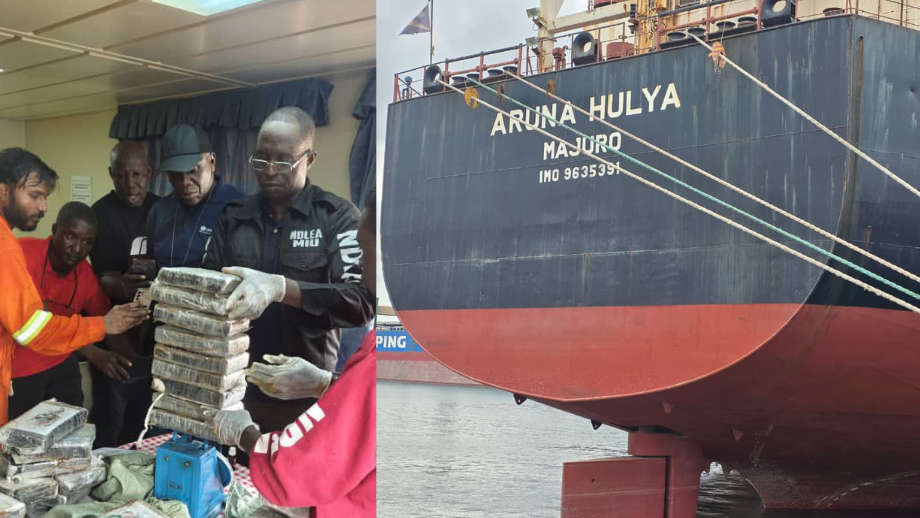

A Nigerian court has convicted 11 Indian sailors and their merchant vessel for trafficking cocaine through Lagos, imposing financial penalties of about $6 million as Africa’s most populous country steps up enforcement against narcotics moving through its commercial ports.
- A Nigerian court convicted 11 Indian sailors and their vessel for trafficking 31.5 kg of cocaine through Lagos, imposing about $6 million in fines.
- Restitution includes $5.3 million from the vessel's owners, individual fines for principal officers, and $50,000 from each remaining sailor.
- The ship, MV Aruna Hulya, was seized at Apapa Port after arriving from the Marshall Islands and searched by Nigerian authorities.
- The ruling is part of Nigeria's intensified campaign against international narcotics trafficking through its seaports, especially targeting maritime routes used by drug networks.
The Federal High Court in Lagos found the crew of MV Aruna Hulya guilty after National Drug Law Enforcement Agency operatives discovered 31.5 kilograms of cocaine concealed in Hatch 3 of the ship at the GDNL Terminal in Apapa Port.
The vessel had arrived from the Marshall Islands when authorities searched it on January 2, 2026.
The ruling has renewed attention on the exposure of African ports to international drug-trafficking networks.
Nigeria is one of West Africa’s main maritime gateways, while Lagos handles a significant share of the country’s imports and exports.
Court approves plea bargain
Justice Joseph Chukwujekwu Aneke delivered the judgment on June 11 after adopting plea-bargain terms agreed by the prosecution and defence.
The court convicted all 12 defendants, including the vessel, under Section 25 of the NDLEA Act.
Each defendant was ordered to pay a statutory fine of ₦100,000. In addition, the court directed MV Aruna Hulya to pay $5.3 million in restitution to the Nigerian government.
The ship’s owners are responsible for the payment. Authorities may auction the vessel if they fail to meet the obligation.
Three principal officers, Sharma Shashi Bhushan, Nilesh Mukuno Bhalerad and Melethil Insaf Rahman, were also ordered to pay $100,000 each.
Meanwhile, the remaining eight sailors must pay restitution of $50,000 each, taking the combined financial penalties to about $6 million.'
![A Nigerian Court. [ThisDay]](https://ocdn.eu/pulscms/MDA_/8bd6441ee19831d108959fb31a9c7a29.jpeg)
Nigeria targets international trafficking routes
The conviction forms part of Nigeria’s wider campaign against trafficking networks that use the country as a transit point for cocaine headed to Europe and other markets.
Nigeria’s location on the Gulf of Guinea, extensive coastline and busy commercial ports make it an important trade hub. However, those same advantages also expose the country to criminal networks seeking to move narcotics through maritime routes.
Against that backdrop, authorities have increased inspections at seaports, airports and land borders, with the NDLEA relying more heavily on intelligence-led operations.
NDLEA Chairman Mohamed Buba Marwa said the latest judgment was the third recent conviction involving foreign nationals and vessels on similar charges.
“This judgment is the third of its kind in recent times, following the convictions of foreign nationals and vessels on similar charges.
“Let it be known that these are not coincidences; they are the direct result of deliberate, intelligence-led operations by our officers who remain vigilant at every port of entry.”
Marwa said the ruling showed that Nigeria would not allow foreign or domestic trafficking networks to use its territory freely.
“The NDLEA will not relent. Whether you come by air, land, or sea; whether you are a Nigerian or a foreign national, if you attempt to use our waters as a narcotics highway, you will face the full weight of Nigerian law.
“Our courts have spoken, and we will continue to give them reason to speak. The war against drug trafficking is one we are winning, and we intend to keep it that way,” he said.