Petro Challenges Election Results as Colombia’s “Tiger” First-Round Victory
The hard-right presidential candidate Abelardo “El Tigre” de la Espriella emerged as the frontrunner in Colombia’s presidential election on Sunday, setting up a June 21 runoff against left-wing senator Iván Cepeda after a closely contested first round that was quickly overshadowed by President Gustavo Petro’s allegations of electoral irregularities. According to the final bulletin (No.67) […]
 Black News
The hard-right presidential candidate Abelardo “El Tigre” de la Espriella emerged as the frontrunner in Colombia’s presidential election on Sunday, setting up a June 21 runoff against left-wing senator Iván Cepeda after a closely contested first round that was quickly overshadowed by President Gustavo Petro’s allegations of electoral irregularities.
According to the final bulletin (No.67) released by the National Registry Office, De la Espriella secured 43.74% of the vote, finishing ahead of Cepeda, who obtained 40.91%. Conservative senator Paloma Valencia followed with 6.92%, while centrist candidate Sergio Fajardo received 4.26%.
The outcome sets the stage for a high-stakes second round that could determine whether Colombia continues along the political path established by Petro’s administration or pivots sharply toward a more conservative agenda centered on security, economic growth and closer relations with the United States.
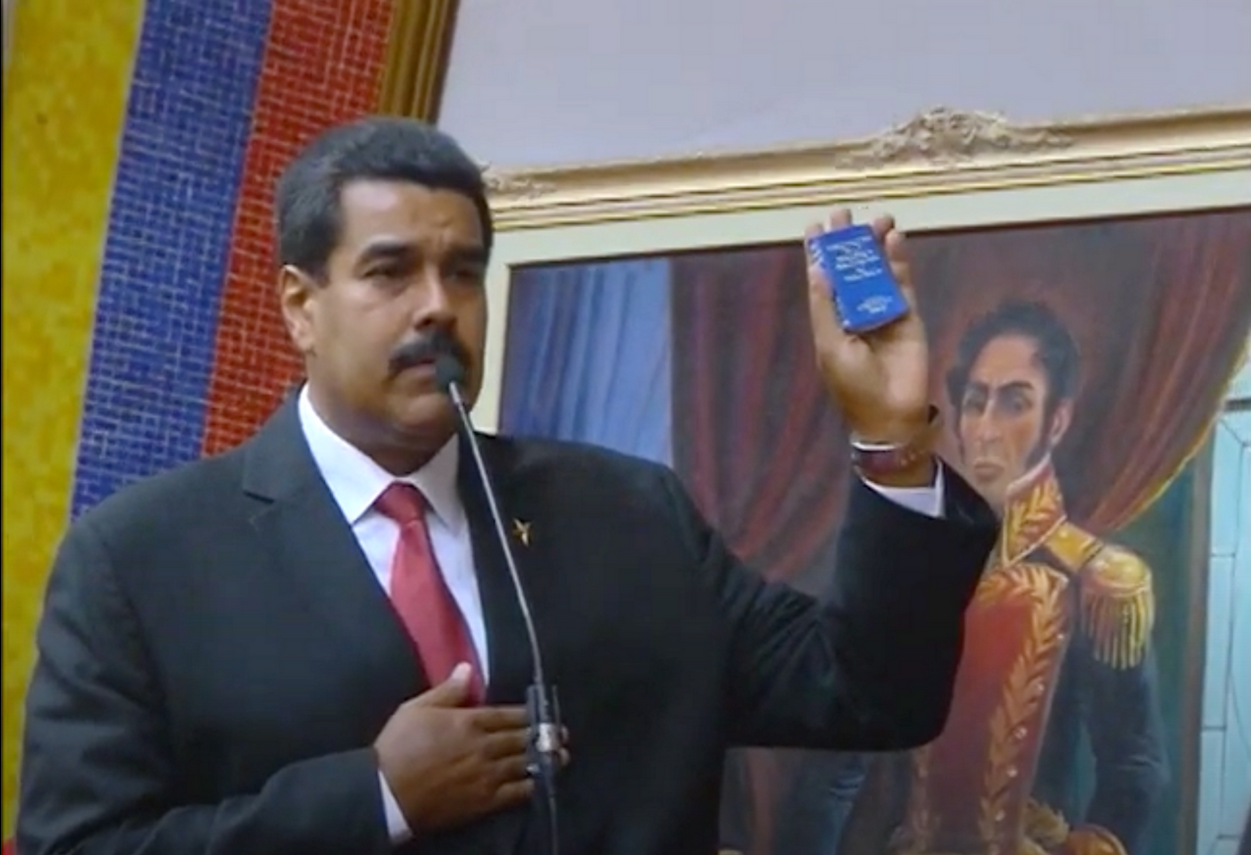
Within hours of the results being announced, Petro cast doubt on the preliminary count, stating on social media that he would not recognize the pre-count figures and would only accept the results produced through the official electoral scrutiny process conducted by judicial commissions.
The president argued that the election-day count “has no binding force” and raised concerns about alleged modifications to electoral software and inconsistencies in the voter registry. Petro further suggested that hundreds of thousands of voter identification records may have been improperly added to the electoral census before the vote.
Petro’s allegations quickly became the dominant political controversy of election night. While the president suggested that software modifications and irregularities in the voter registry may have affected the process, he presented no public evidence to substantiate the claims. Electoral authorities, judicial officials and international observers subsequently defended the integrity of the vote, creating a sharp contrast between the president’s warnings and the assessments of institutions directly responsible for overseeing the election.
National Registrar Hernán Penagos responded forcefully to the allegations, rejecting claims that the software used in the electoral process handled voter identification records. Penagos emphasized that the electoral census had been closed since April 30, that all voting records were publicly available for review and that party witnesses had monitored voting and counting procedures throughout the country.
Attorney General Gregorio Eljach also challenged Petro’s assertions, publicly demanding evidence to support accusations that risked undermining confidence in the electoral process.
The controversy intensified briefly when Cepeda questioned apparent discrepancies in electoral databases and echoed concerns regarding the voter registry. However, the left-wing candidate later moderated his position after internal reviews by his campaign.
“We have found no evidence of facts that merit a statement regarding eventual irregularities,” Cepeda said, effectively distancing himself from claims that the election had been manipulated.
The president’s claims appeared to lose momentum after Cepeda’s own campaign acknowledged that it had uncovered no evidence of fraud or irregularities sufficient to challenge the outcome. The concession strengthened the position of election officials, who maintained throughout the day that Colombia’s voting system functioned normally and transparently.
Former Justice Minister Wilson Ruiz Orejuela was among those who condemned Petro’s statements, accusing the president of attempting to cast doubt on a legitimate electoral process.
“Petro did not recognize last night’s results,” Ruiz said. “But he has been a complicit driver of the rigged elections that took place in Venezuela.”
International observers, meanwhile, offered a markedly different assessment of the electoral process.
Scott Campbell, Colombia representative for the United Nations Human Rights Office, congratulated Colombians for what he described as a peaceful election day and praised the country’s institutions for overseeing the vote.
“Today we have not documented significant violations or infringements of human rights,” Campbell said following the election.
Support for the integrity of the process also came from the United States.
Republican Senator Bernie Moreno, who participated as an international observer, described Colombia’s voting system as one of the most effective he had encountered.
“The beauty of democracy was fully displayed as the people of Colombia exercised their power to chart their future in their own hands and with their own voices,” Moreno wrote on social media.
Speaking later to Colombian media, Moreno said he had informed Secretary of State Marco Rubio and President Donald Trump that “the elections in Colombia were completely free and well done.”
Moreno went further, suggesting aspects of Colombia’s voting system compared favorably with those used in the United States. “They do it better here in Colombia than in the United States,” he said.
U.S President Donald Trump directly endorsed De La Espriella ahead of Sunday’s vote, stating: ‘He has all my support.”
The controversy surrounding Petro’s claims also drew attention from Venezuela’s democratic opposition. President-elect Edmundo González praised Colombia’s institutions and warned of the fragility of democratic systems. “I look at Colombia with hope and with memory,” González wrote. “I know the value of what our Colombian brothers possess because we lost it. The right to choose, and the institutions that make it possible, are not easily recovered. Yours are still standing. Protect them.”
While election authorities sought to contain the controversy, De la Espriella’s victory triggered an immediate wave of support from conservative political leaders across Latin America and beyond.
Argentine President Javier Milei was among the first foreign leaders to congratulate the Barranquilla criminal defense lawyer. “This result reflects the desire for freedom and progress of the Colombian people, and an explicit willingness to say enough to the failed socialist model that has caused so much damage to our region and to Colombia in particular over the last four years,” Milei wrote on X.
The Argentine leader added that if the result is repeated in the runoff, “Colombia will once again join the community of free nations” before concluding with his trademark slogan: “Long live liberty, damn it.”
Ecuadorian President Daniel Noboa also congratulated De la Espriella and suggested Colombians were demanding political change after four years of left-wing government.
“Being a bad loser is contagious,” Noboa wrote in an apparent reference to former president Rafael Correa, and his criticism of the 2025 election results, adding that Colombia needs “real change.”
Venezuelan opposition leader María Corina Machado likewise celebrated the outcome, saying the result would strengthen democratic institutions and regional security. “The Venezuelan people need a strong and united Colombia,” Machado said, arguing that democratic nations must work together against organized crime and authoritarianism.
In Washington, Republican Congresswoman María Elvira Salazar welcomed De la Espriella’s performance and interpreted the result as a repudiation of Petro’s administration. “The results send a powerful message,” Salazar wrote. “Millions of Colombians reject Gustavo Petro’s direction and want to recover security, prosperity and freedom.”
The Conservative Party formally endorsed De la Espriella following the first-round results, describing him as the candidate who best “represents Colombians demanding a firm direction” for the country.
The runoff campaign now enters a critical three-week stretch as De la Espriella and Cepeda compete for support from voters whose preferred candidates were eliminated in the first round.
For firebrand De la Espriella, victory on June 21 would represent a dramatic ideological shift following four years of Petro’s left-wing presidency and could usher in closer ties with Washington and key conservative governments across the hemisphere.
For Cepeda, the challenge will be persuading voters to embrace continuity with Petro’s political project despite deep public dissatisfaction over security, economic mismanagement, corruption scandals and an increasingly polarized political climate.