South African-born Elon Musk nears trillionaire status amid AI, space, and energy boom
Elon Musk’s march toward becoming the world’s first trillionaire is now a distant fantasy in global finance circles, with Forbes estimating his fortune at about $839 billion.
 Black News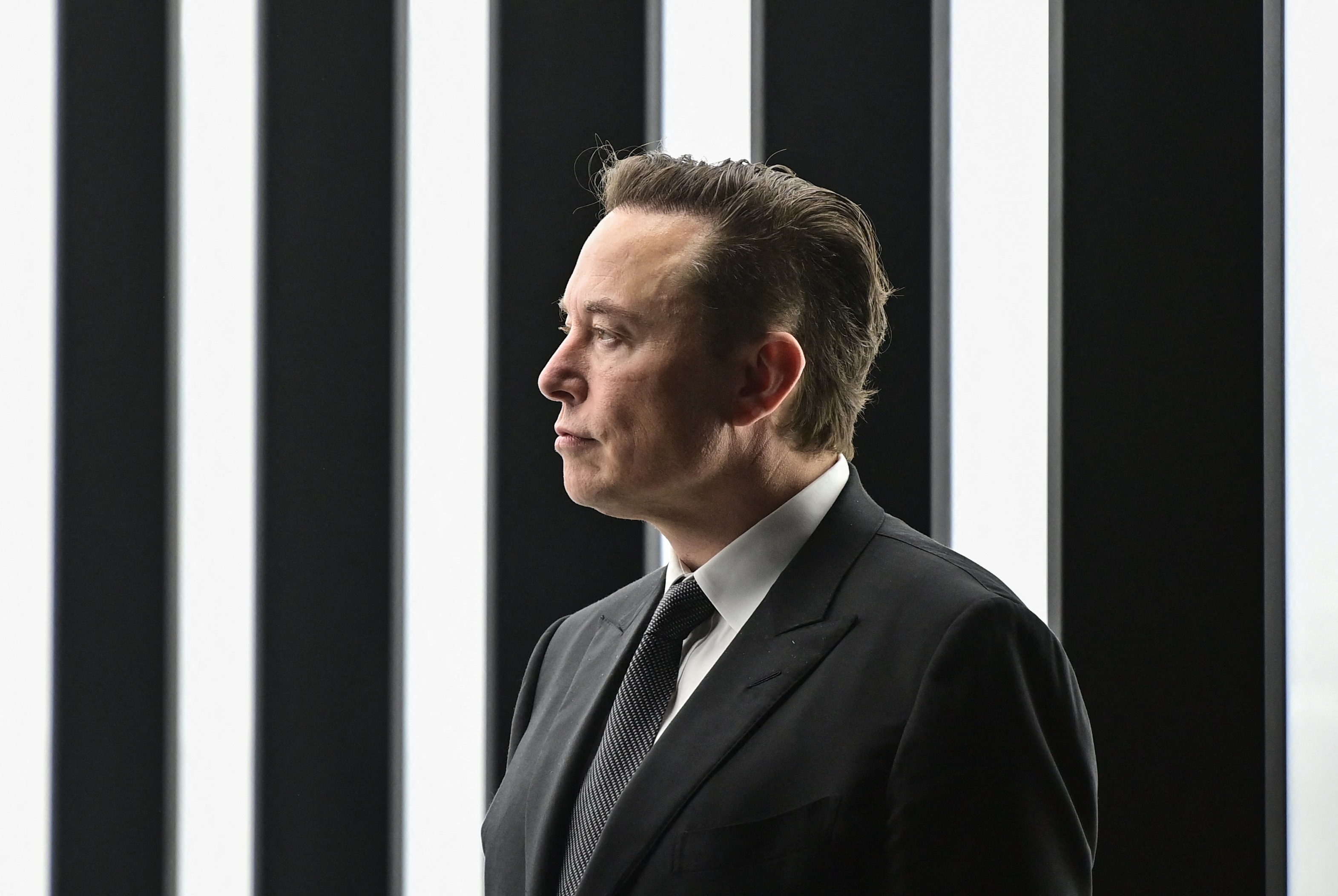
![South African-born billionaire Elon Musk is moving closer to becoming the world’s first trillionaire as Tesla expands its footprint across Africa through major investments in Morocco and growing telecom ambitions on the continent. [Photo by Patrick Pleul/AFP via Getty Images]](https://ocdn.eu/pulscms/MDA_/68863103bf12941278527d0185956bfe.jpg)
Elon Musk’s march toward becoming the world’s first trillionaire is now a distant fantasy in global finance circles, with Forbes estimating his fortune at about $839 billion.
- Elon Musk’s fortune has surged to about $839 billion, intensifying projections that he could become the world’s first trillionaire.
- Tesla’s $5 billion Morocco factory and Africa’s first Tesla dealership signal the company’s growing strategic focus on the continent.
- At the same time, regulatory tensions in South Africa have delayed Starlink’s planned $113 million investment.
- Musk’s rise is reshaping conversations around Africa’s role in AI, clean energy, digital infrastructure, and global wealth creation.
The South African-born entrepreneur now sits comfortably ahead of rivals including Jeff Bezos, Mark Zuckerberg, and Larry Page, driven largely by the explosive rise of artificial intelligence, space technology, electric vehicles, and satellite communications.
But for Africa, Musk’s rise to wealth carries deeper symbolism as he has become one of the continent’s most globally influential technology figures, even as much of his business empire was built abroad.
His growing dominance across Tesla, SpaceX, xAI, Starlink, and X is reshaping how Africa is viewed in the future global economy, not merely as a supplier of raw materials but as a strategic frontier for digital infrastructure, clean energy, and advanced manufacturing.
Starlink
![South African-born billionaire Elon Musk is moving closer to becoming the world’s first trillionaire as Tesla expands its footprint across Africa through major investments in Morocco and growing telecom ambitions on the continent. [Photo Illustration by Dominika Zarzycka/SOPA Images/LightRocket via Getty Images]](https://ocdn.eu/pulscms/MDA_/28fb6d3d40b75c6d489e4b938f7421b3.jpg)
Starlink is currently Musk's most active investment in Africa, providing high-speed satellite internet to underserved regions on the continent.
His first major contact with Africa came when Starlink launched in Nigeria in January 2023, and it has since expanded to nations including Kenya, Rwanda, Zambia, Ghana, and Botswana.
Most recently, Starlink pledged a whopping $113 million investment to help boost broadband access in the Southern African Development Community region.
Though initially stalled by South Africa’s Broad-Based Black Economic Empowerment law (B-BBEE), a stipulation that requires licensed telecom companies to have 30% ownership by Black South Africans or other historically disadvantaged groups.
Musk, in a post on X, publicly criticised the stipulations, stating that “Starlink is not allowed to operate in South Africa, because I’m not black”, a dig aimed at the B-BBEE.
However, resolutions were reached months later, when the Communications Minister, Solly Malatsi, proposed an amendment to the B-BBEE that allowed companies to forego shared ownership in favour of Equity Equivalent Investment Programmes (EEIPs).
The tensions highlight the broader balancing act confronting African governments as they seek foreign technology investment while also addressing historical inequalities and domestic economic participation.
Tesla
![South African-born billionaire Elon Musk is moving closer to becoming the world’s first trillionaire as Tesla expands its footprint across Africa through major investments in Morocco and growing telecom ambitions on the continent. [Photo by Nora Tam/South China Morning Post via Getty Images]](https://ocdn.eu/pulscms/MDA_/66f635bba5e0794f88f2e9bbda590165.jpg)
Tesla’s recent expansion into Africa has intensified that conversation with one of the company’s most significant moves on the continent. Tesla announced plans to establish its first African manufacturing facility in Kenitra, Morocco, with a reported $5 billion investment.
The factory is expected to produce up to 400,000 vehicles annually and create roughly 25,000 jobs. Elon Musk reportedly cited Morocco’s political stability and the strategic importance of the Tanger Med logistics hub as key factors behind the investment.
The Morocco expansion marks a turning point for Africa’s position in the global electric vehicle supply chain. Analysts say the project could strengthen the continent’s role in battery manufacturing, automotive exports, and clean-energy infrastructure at a time when demand for electric vehicles continues to surge globally.
Tesla has also accelerated its retail presence in Africa, opening the continent’s first Tesla dealership in Morocco in February 2026, following the establishment of Tesla Morocco as an energy and mobility hub in Casablanca in 2025.
The development allows Moroccan consumers to purchase Tesla Model 3 and Model Y vehicles directly through official retail channels, rather than relying on costly third-party imports.
The expansion comes as Africa’s electric vehicle market, while still relatively small, gains momentum amid growing urbanisation, climate pressures, and rising interest in renewable energy technologies.
Beyond Africa, Musk’s growing fortune reflects a wider transformation in how global wealth is now created. Traditional industrial fortunes are increasingly being overtaken by entrepreneurs controlling AI infrastructure, data systems, clean energy platforms, advanced engineering, and digital communications networks.
For younger Africans, especially those within rapidly growing technology ecosystems in Nigeria, Kenya, South Africa, Egypt, and Rwanda, Musk’s trajectory represents both inspiration and contradiction, a proof that globally disruptive innovation can emerge from African roots, but also a reminder of the structural barriers that still push many founders to scale abroad.
Whether Musk eventually crosses the trillion-dollar threshold or not, his influence is already redefining conversations around wealth, innovation, and geopolitical power, while forcing a new global focus on Africa’s role in the industries shaping the future.