South Africa’s unemployed population hits 8.1 million amid rising migrant tensions
South Africa’s unemployment crisis deepened in the first quarter of 2026, worsening economic pressures that analysts warn are fueling renewed anti-immigrant tensions in Africa’s most industrialised economy.
 Black News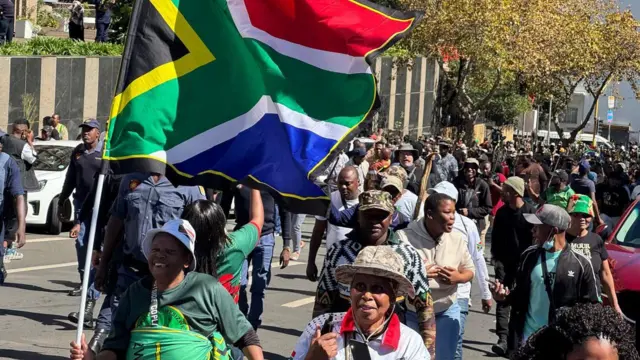


South Africa’s unemployment crisis deepened in the first quarter of 2026, worsening economic pressures that analysts warn are fueling renewed anti-immigrant tensions in Africa’s most industrialised economy.
- South Africa's expanded unemployment rate rose to 43.7% in the first quarter of 2026, deepening the country's economic struggles.
- The total number of unemployed people climbed to over 8.1 million, continuing a trend of persistently high joblessness above 30% for more than five years.
- Rising unemployment and economic hardship are fueling renewed anti-immigrant tensions and sporadic xenophobic incidents, especially in poor urban areas.
- Accusations targeting migrants remain common despite being regularly challenged by researchers and rights groups.
New data released by Statistics South Africa showed that the country’s expanded unemployment rate - which includes discouraged job seekers - rose to 43.7% between January and March, up from 42.1% in the previous quarter.
The number of unemployed South Africans also climbed to 8.137 million during the quarter, compared with 7.836 million recorded between October and December 2025.
South Africa’s official unemployment rate has remained above 30% for more than five years, ranking among the highest in the world and highlighting deep structural weaknesses in the economy despite repeated reform pledges by successive governments.
However, the country’s unemployment rate fell to a five-year low in the final quarter of 2025, supported by job gains in the community and social services as well as construction sectors.
According to Statistics South Africa, the unemployment rate eased to 31.4% from 31.9% in the previous quarter, slightly outperforming Bloomberg expectations of 31.7%.
Despite the decline, the rate remains above the 30% mark, underscoring the persistent fragility of South Africa’s labour market since 2020.
Economic hardship fuels pressure on migrants
The worsening labour market comes as anti-immigrant rhetoric and sporadic xenophobic incidents continue to resurface in parts of the country, particularly in densely populated townships and economically strained urban communities.
![The coalition government formed in 2024 has struggled to significantly accelerate job creation despite improved investor sentiment and modest economic recovery in some sectors [Photo by Leon Sadiki/Bloomberg via Getty Images]](https://ocdn.eu/pulscms/MDA_/4ba3edb629aa487d86d1f502090f3a81.png)
Migrants from countries including Zimbabwe, Nigeria, Ethiopia, Somalia, and Mozambique are frequently accused by some groups of taking jobs, straining public services, and contributing to crime — claims researchers and rights organisations have repeatedly disputed.
Economic frustration has increasingly merged with political tensions as many South Africans grapple with rising living costs, persistent electricity shortages, weak economic growth, and limited employment opportunities.
The coalition government formed in 2024 has struggled to significantly accelerate job creation despite improved investor sentiment and modest economic recovery in some sectors.
Job losses in the first quarter were broad-based, with only three out of 10 sectors tracked by Stats SA recording employment gains. The community and social services sector recorded the steepest decline in jobs, while manufacturing, mining, and agriculture posted limited employment increases.
Young people and Black women remain disproportionately affected by unemployment, highlighting the entrenched inequalities that continue to shape South Africa’s post-apartheid economy.
Analysts warn that persistently high unemployment and widening social inequality could further inflame anti-immigrant tensions ahead of future elections, particularly as migration increasingly becomes a focal point in political debate.