Strait of Hormuz closure has become a "payday" for Africa's richest man
The closure of the Strait of Hormuz has turned into a “payday” for Aliko Dangote, as global energy disruptions push up refining margins and increase demand for alternative supply sources.
 Black News

The closure of the Strait of Hormuz has turned into a “payday” for Aliko Dangote, as global energy disruptions push up refining margins and increase demand for alternative supply sources.
- The closure of the Strait of Hormuz has led to higher refining margins and increased demand for alternative energy sources, benefiting Aliko Dangote's refinery business.
- Fertiliser and jet fuel prices have surged due to global supply disruptions caused by geopolitical tensions, particularly Iran's blockade of the Strait of Hormuz.
- Dangote plans to more than double his Lagos refinery's capacity to 1.4 million barrels per day, aiming for output comparable to India’s Reliance Industries within 30 months.
- Nigeria’s fuel security has improved due to the refinery, but much of Africa remains dependent on imported fuel, exposing it to risks from Middle Eastern conflicts.
The closure of the Strait of Hormuz has turned into a “payday” for Aliko Dangote, as global energy disruptions push up refining margins and increase demand for alternative supply sources.
According to a senior executive, fertiliser prices have doubled while jet fuel margins have widened significantly amid tightening global supply. Dangote told the Financial Times: “You can see all the other oil companies, their profitability has doubled. So you don’t expect us to do less.”
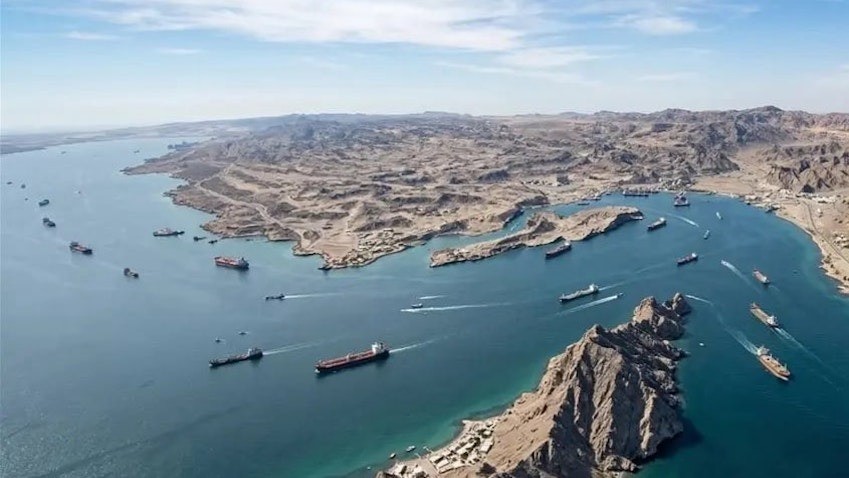
The remarks come amid heightened global energy volatility driven by Iran’s blockade of the Strait of Hormuz. The disruption has rippled across global markets, including Africa.
Refinery expansion
Dangote is also accelerating plans to more than double capacity at his Lagos refinery to 1.4 million barrels per day, noting that within 30 months it would reach the equivalent of 10% of US refining capacity. He added that the expansion would place his operation on par with India’s Reliance Industries in output scale.
The refinery has strengthened domestic fuel security in Nigeria, with analysts saying local supply conditions have improved despite global price volatility.
Across Africa, reliance on imported fuel remains high, particularly in East and Southern regions, where about 75% of refined products are sourced from the Middle East. This leaves many economies vulnerable to shocks of the Iran-Israel war.
Business Insider Africa previously reported that the refinery has been receiving a surge of inquiries as African governments scramble to secure fuel supplies amid disruptions triggered by the US-Israel war on Iran.
South Africa, for instance, is reportedly in talks for a 12-month supply agreement with Nigeria, as countries move to cushion themselves from tightening global fuel markets.
Dangote is also considering expansion into East Africa, including plans for a $17 billion 650,000-barrel-per-day refinery in Kenya, a move that would further extend his footprint across the continent’s energy sector.