The 40-Day War: Democratic Resistance in Urban Public Spaces
Address delivered on 2 June 2026 at the Specialised Session of ‘The power of people in Iran’s governance – the impact of Tehran gatherings on the Muslim world’s perception during the Ramadan War’. It was organised by the Communication and International Affairs Centre of the Municipality of Tehran at the Asian Mayors’ Forum. Dedicated […] The post The 40-Day War: Democratic Resistance in Urban Public Spaces appeared first on Daily Star.
 Black News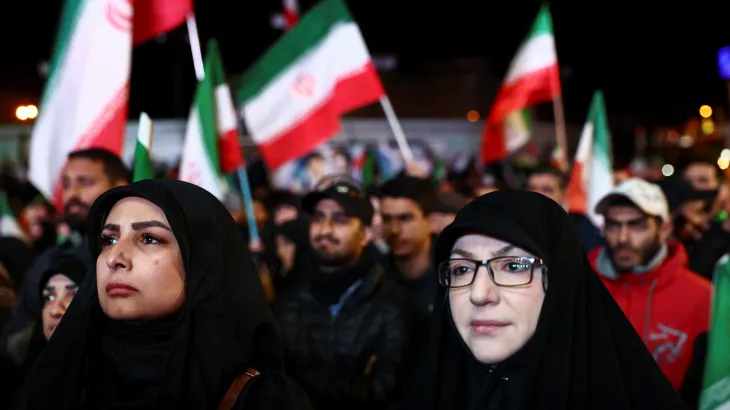
Address delivered on 2 June 2026 at the Specialised Session of ‘The power of people in Iran’s governance – the impact of Tehran gatherings on the Muslim world’s perception during the Ramadan War’. It was organised by the Communication and International Affairs Centre of the Municipality of Tehran at the Asian Mayors’ Forum.
Dedicated to the little girl martyrs of the Shajareh Tayyebeh Elementary School in Minab, Islamic Republic of Iran.
Tehran: the heartening city of resistance
It was heartening to see millions of Iranians come out into the streets after Iftar during Ramadan. The lived experience of the 40-Day War brought out the masses into the streets – spontaneously. Forty-seven years of the tensions of sanctions found a sudden release in 40 days and 47 years of conscious resistance suddenly became spontaneous resistance.
Liberation of the Mind
Iranian minds were liberated from fear, negative anger, and tensions into open and defiant confrontation with the mightiest imperialist army in history. People rediscovered their collective heroism under the astute leadership of their elected government. People enhanced their participatory democracy and deepened the roots of national sovereignty amongst themselves.
Celebration & Commemoration
It was an atmosphere of celebration of impending total victory and commemoration of martyrs. Every ‘minor’ victory was celebrated as a single nation. Every martyr was commemorated as a single family. There were no individual leaders. The people led themselves with discipline peacefully while the war of aggression raged. People of all ages, abilities, disabilities, social backgrounds, genders, shapes, sizes, and textures gathered in safety, security, and dignity.
Nobility of new social fasting
After fasting the whole day they sustained themselves by shared belief and care for one another. They forged new social bonds of solidarity as a single new nurturing family through political kinship – until late night. All became keepers of one another. They kept vigil of the resistance.
The role of women
As women are the laps of families they, organically, emerged as the collective leadership. There were decentralised mass gatherings in streets and squares, which were turned into cultural sites of resistance. There were celebratory colours and voices that remembered martyrs and soldiers on the frontlines of hard and cyber warfare. The streets became an extension to their warm homes in cold winter nights.
High spirits & social cohesion
In high spirits they sang, ‘Friends have gone, blood-soaked and headless, we remain, but together.’ The masses were always calm and peaceful in the midst of war. Their repressed anger at imperialism was turned into justified anger at oppression. They found a unique cohesion and solidarity that were both social and psychological, which provided self- and group-therapy for ongoing traumas of war.
Multiple Fusion
There was a natural fusion of cultures, spirituality, sovereignty, and identities. There were no selfish aspirations but only to build the common good of all by all – with heart and soul. The sights of people on streets to advance a just cause were inspiring and became an immersive TV experience for us.
Cultural Struggle
We felt deeply immersed in the duality of Jihad—e-Akbar (inward greater struggle) and Jihad-e-Asghar (outward minor struggle). The dual struggle inspired cultural production not only amongst Iranians but also amongst us as external solidarity workers. We flooded social media with revolutionary consciousness. It was a further counter to cultural imperialism and mental colonialism.
Overcoming alienation
For those who were culturally and socially alienated it was a return to their indigenous thought systems. Culture was strengthened as a weapon of ‘soft war’ in the midst of ‘hard war’ to assert their mental independence or sovereignty.
Function of Ashura rituals
Of all the cultural performances and literature what stood out was Latmiya as symbolism of Karbala and its unifying Ashura rituals. We know that Ashura as communal, family, and religious practice inspired certain historic events such:
- The Tobacco Protest of 1891-92; the Constitutional Revolution of 1905-1911; the Islamic Revolution of 1979; and resistance to the Saddam Hussein/USA War of 1980-88.
Now it has inspired resistance to the new historic 40-Day War.
Poetic eulogies
The eulogists who chant poetic laments of martyrdom, struggle, and sacrifice were truly inspiring though we may not have understood the words but we felt the language of emotions in real wartime conditions. We watched on YouTube the large crowds that eulogists drew in their thousands.
A teardrop for Imam Hussein
We shed a teardrop for Imam Hussein whose martyrdom had opened up a new epoch in history. Now the 40-Day War has opened up another new epoch in modern history. The 40-Day War is the modern form of the Battle of Karbala for truth and justice. It fused mourning, emotions, patriotism, and political and military mobilisation.
Memories of Arbaeen Walk
The meditative Arbaeen Walk covers a distance of 80 kilometres from Najf to Karbala. About 2-million pilgrims participate in it while the total number of pilgrims in Karbala is about 20-million annually. The Walk is a recommitment and rededication to the perennial struggle for truth and justice. It is a renewal that all of us need. It also fused Islam and the Islamic Republic as a sovereign nation with a sovereign mind.
The People’s Mandate
The major outcome of the resistance on the streets and squares was the people’s mandate to their government: NO SURRENDER. The government listened and developed the 10-Point Plan as the non-negotiable foundation of diplomacy. Iranians released a unique whole-process of grassroots people’s democracy. The struggle for political transformation, economic freedom, social emancipation, and cultural liberation.
International lessons from the 40-Day War:
- The streets are an extension to state bureaucratic structure.
- The streets can massify participatory democracy.
- People’s power is both vertical and horizontal in structure.
- The need for the people and government to share mutual trust.
- Government and people can determine their own independent political and economic statecraft and governance.
- The people have set a new standard for the Global South.
- Iran altered the doctrine of guerrilla warfare by extending it to aerial and naval warfare.
- By using low-cost drones, missiles, dwarf submarines, and high-speed boats.
- Even standing armies in the Global South can apply new guerrilla warfare tactics and technology.
- Belief is the foundation of victory.
- Each youthful generation in all cities of the world has to discover its own HOW and fulfil it.
- HOW to break the regional vertebrae of the spinal cord of imperialism, which is now 150 years old.
Iranians & civilizational values
Iranians physically embody Persian civilizational values. They embody the historical responsibility to transmit such values to posterity and humanity. They have proven their capacity and capability for such larger-than-life challenge.
In spite of these three factors we still ask: Will Iranians fail humanity?
By Haroon Aziz, South Africa
The post The 40-Day War: Democratic Resistance in Urban Public Spaces appeared first on Daily Star.