‘What Is Wrong with You?!’: Trump Confronted Over Iran Lie, Can’t Even Let the Question Finish Once Obama’s Name Drops — Then Spirals and Ends Up Exposing a Massive Gap in His Strategy
President Donald Trump has spent weeks trying to project control as tensions with Iran escalate, juggling a volatile oil market and a war that continues […] ‘What Is Wrong with You?!’: Trump Confronted Over Iran Lie, Can’t Even Let the Question Finish Once Obama’s Name Drops — Then Spirals and Ends Up Exposing a Massive Gap in His Strategy
 Black News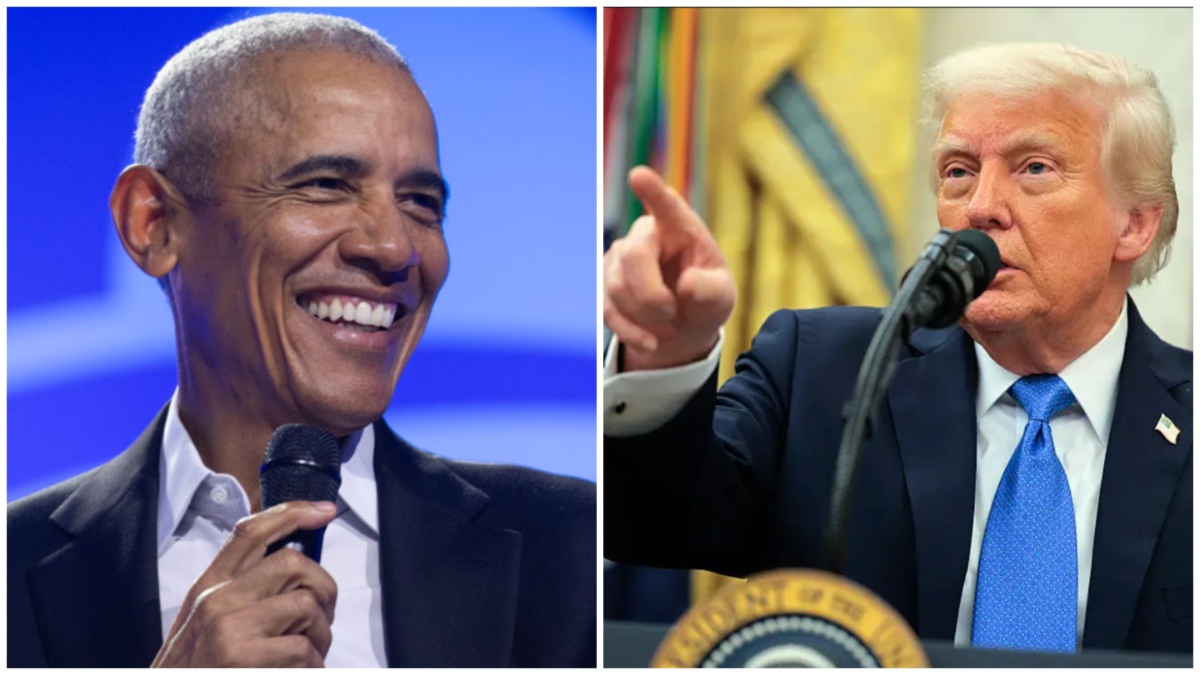
President Donald Trump has spent weeks trying to project control as tensions with Iran escalate, juggling a volatile oil market and a war that continues to raise new questions about strategy.
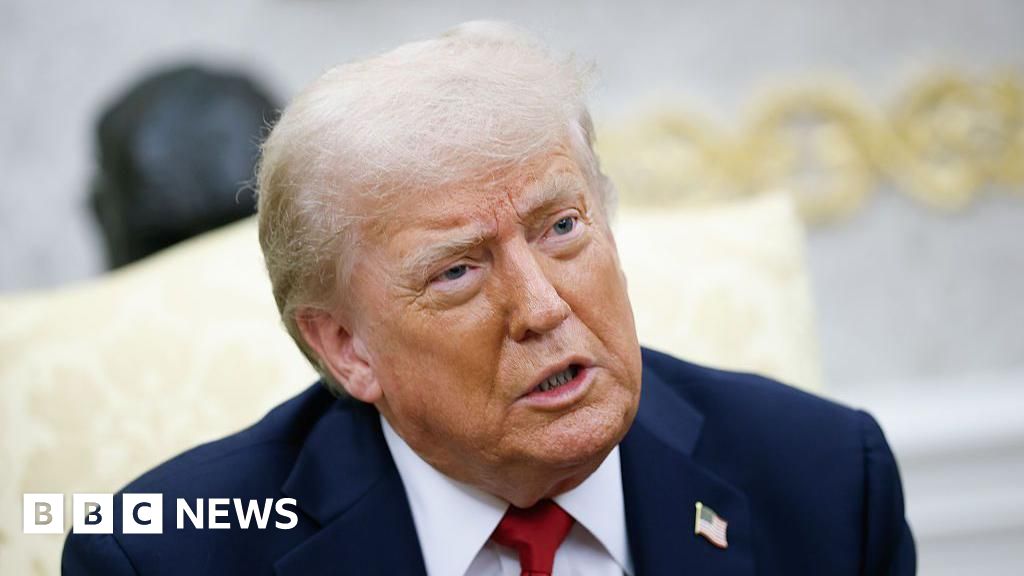
But in a moment that quickly veered off script, that balancing act gave way to something more familiar — the instant shift that tends to happen when former President Barack Obama’s name enters the conversation.
For nearly a decade, Trump hammered Obama over what he described as planeloads of cash sent to Iran — “hundreds of millions,” he claimed, stripped from U.S. banks and flown out “as ransom.”
So when CNN’s Kaitlan Collins raised that history while pressing him on whether his own policy could unlock billions for Tehran, the exchange turned almost immediately.
“You criticized President Obama for giving Iran $1.7 billion …” Collins began.
Trump didn’t let her finish.
“Well, I just want to have as much oil in the system as possible,” he cut in. “We don’t even know if Iran gets that money. Frankly, I think it’s very hard for them to get it.”
He kept going, talking over the question as he tried to explain the move.
“But you have ships that are out that are loaded up with oil — rather than keep it there, I’d rather see it go to the system,” Trump said. “Any small amount of money that Iran gets is not going to have any difference in this war.”
Collins tried to press the point.
“Even $14 billion, you don’t think helps them?” she asked.
“Where’s the $14 billion?” Trump shot back, appearing unclear on the scale of the policy shift at the center of the exchange.
“It’s the inflated price … they get $14 billion from the oil,” Collins responded.
“I don’t know that they’re getting the money,” Trump said. “When this is all over, I’ll tell you who’s getting the money.”
The back-and-forth underscored how quickly the conversation can slip when Obama’s name enters the conversation, especially when it undercuts Trump’s own rhetoric.
The answer sidestepped concerns that lifting sanctions on roughly 140 million barrels of Iranian oil could translate into a massive financial boost for Tehran. With oil prices hovering around $100 a barrel, the total value could reach into the tens of billions.
Collins later asked Barak Ravid, a global affairs correspondent for Axios who appeared on her show “The Source,” what he made of Trump’s comments.
“If you get to the point that after three weeks of war against Iran, the U.S. is allowing Iran to sell $14 billion worth of oil, I think more than anything it shows there wasn’t enough thinking in advance about how deep the crisis in the oil market could be,” Ravid said.
Trump officials say allowing that oil to hit the market could help bring down global prices, easing pressure on American consumers. Treasury Secretary Scott Bessent framed it as a strategic maneuver, claiming the U.S. could track transactions and limit Iran’s ability to benefit.
But the strategy has raised questions among foreign policy experts. Richard Nephew, who helped negotiate the original nuclear deal, warned that the move signals that the U.S. is now responding to market pressure in a way that gives Iran leverage, according to the New York Times.
Critics say the comparison to the blowback Obama faced isn’t just fair — it’s unavoidable.
Back in 2016, Trump seized on a $1.7 billion payment made during the Obama administration, repeatedly framing it as a betrayal of the American taxpayer.
Democrats have zeroed in on the irony. Sen. Mark Warner of Virginia wrote: “I remember when my Republican colleagues blasted Barack Obama over $400M tied to hostages and an old debt with Iran. Now, under Donald Trump, sanctions relief on 140M barrels of Iranian oil could net Tehran up to $15 BILLION — while the U.S. is at war. Where’s the outrage now?”
California Gov. Gavin Newsom added his own jab, posting an image mocking past outrage with the caption: “Remember when MAGA melted down over Obama’s imaginary ‘pallets of cash’ to Iran? Now Trump’s doing it for real — and not a peep.”
The reaction hit harder on social media, with some critics focusing less on the policy details and more on Trump’s response to being challenged.
One user, reacting to the exchange with Collins, wrote: “How do you keep yourself from asking him, ‘What the f@ck is wrong with you?!’”
Another cut straight to the point: “He’s such an idiot.”
A third added: “He has a completely bullsh-t answer for everything. His minions eat it up.”
Trump has continued to make excuses for himself, insisting the policy won’t meaningfully benefit Iran. “Any small amount of money that Iran gets is not going to have any difference in this war,” he said. “But I want to have the system be lubricated.”
Trump has continued to lean on that argument in recent days, returning to his long-standing claims about Obama-era payments to Iran.
Earlier this month, Trump revived one of his familiar attacks on the Obama-era Iran deal.
“If I didn’t terminate the Iran nuclear deal given to us — one of the worst deals ever made by Barack Hussein Obama — remember when they sent Boeing 757s over there loaded with cash? Hundreds of millions of dollars,” he said.
“They took the seats out and filled them with cash. There wasn’t a bank in Virginia, Maryland or D.C. that had any money left. They stripped them and sent it to Iran, almost as ransom.”
But the reality is more complicated. The money stemmed from a failed arms deal with Iran dating back to the 1970s. After the fall of the shah, the U.S. kept the funds without delivering the weapons, and the payment was ultimately part of a settlement to close that case. Because of sanctions, the money had to be delivered in cash.
That context stands in contrast to Trump’s current move, which could potentially allow Iran to profit from oil sales at a time when the U.S. is engaged in military action tied to the region.