When America’s Clergy Are Cuffed, the Nation Should Tremble
A moral alarm is ringing across America. Do you hear it? By Dr. James S. Bridgeforth, M.Ed. Photo by Marshelle Sanders The images out of Broadview, Illinois should rattle the conscience of every American. Broadview isn’t just another suburb west of Chicago—it is home to one of the most active ICE staging and detention sites in the Midwest. For […] The post When America’s Clergy Are Cuffed, the Nation Should Tremble appeared first on Chicago Defender.
 Black News

A moral alarm is ringing across America. Do you hear it?
By Dr. James S. Bridgeforth, M.Ed.
Photo by Marshelle Sanders
The images out of Broadview, Illinois should rattle the conscience of every American. Broadview isn’t just another suburb west of Chicago—it is home to one of the most active ICE staging and detention sites in the Midwest. For years, buses have quietly carried migrants from this unassuming industrial stretch to detention centers and airports, often in the early morning hours, far from public view. In Chicago’s immigrant-rights community, “Broadview” means something specific: a place where families say goodbye, where clergy gather weekly to pray, and where the moral weight of federal enforcement is felt most acutely.
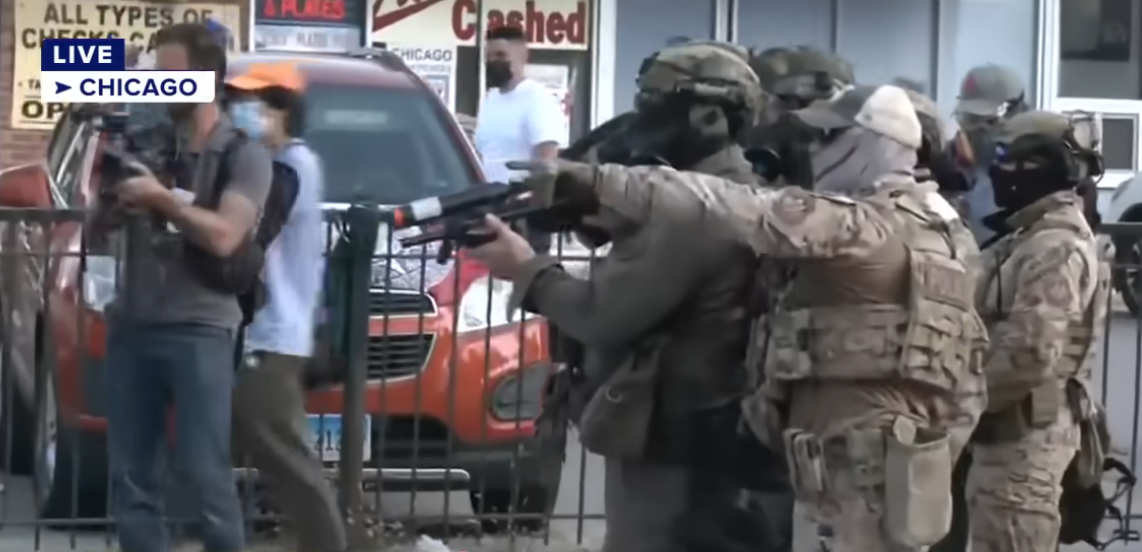
It was at those gates—familiar to every Chicago advocate—where nearly two dozen clergy and faith leaders stood on Friday morning, linking arms in peaceful witness. Pastors. Ministers. Elders. Advocates. They came with prayer and song, as they have done for years. They left in handcuffs.
Reuters reported twenty-one arrests. CBS Chicago documented physical clashes that left officers injured and clergy shaken. NBC News described the scene as chaotic, anguished, and emotionally raw—a collision between spiritual authority and federal force that should trouble us all.
Let’s be clear: Any nation willing to push its clergy to the pavement is a nation crossing a line. And if that does not sober us, what will?
A Sacred Tradition Under Assault
Throughout American history—across race, region, and religion—clergy have stood in the breach for the vulnerable. From the pastors of the civil-rights era who marched in Selma, to the rabbis who chained themselves to the White House fence during refugee crises, to the imams who risked arrest in sanctuary protests, the clergy have always shown up when the government’s power grows too comfortable.
They pray in jail cells. March in the cold. Preach in the face of violence. Carry the nation’s conscience when politics fails to. Clergy are not agitators. They are moral witnesses.
Yet in Broadview, those same men and women were treated as criminals—grabbed, pressed down, zip-tied, and hauled away. Their “crime” was standing for those who cannot stand for themselves: the detained, the undocumented, the families in fear.
Officials called it “restoring order.” History calls it something else: a modern Selma. Not in scale, but in symbolism. Not in numbers, but in meaning. Not in geography, but in moral gravity.
Federal Power, Local Consequences
This is not merely about immigration enforcement. It is about federal overreach—and whether Americans still have the courage to question it. A June 2025 Pew Research Center survey shows that 54% of Americans disapprove of increasing ICE workplace raids, with only 45% in support—clear evidence that the country wants moderation, not escalation.
Closer to home, a Public Policy Polling / Hands Off Chicago survey found that 66% of Chicago voters oppose increasing federal immigration enforcement in the city, and 73% believe the threats to send the National Guard into Chicago are political, not about public safety. Meanwhile, the administration has driven ICE detention to historic levels—nearly 60,000 people held on any given day, a 50% surge since late 2024. When clergy are cuffed at Broadview, it is not just a Chicago story. It is a warning.
If They Can Do This to Clergy…
If America’s clergy are not safe from forceful state intervention, then no one is. If peaceful spiritual leaders can be dragged off for calling attention to humanitarian concerns, then what chance do marginalized communities have? If religious authority can be shoved aside, then political authority has grown too bold.
The clergy in Broadview weren’t protesting for themselves. They were standing for the detained man who cannot speak English, the mother who fears deportation, the child who cannot understand why her father has been taken. If that tradition dies, a pillar of American democracy collapses alongside it.
A Call to Attention, Not Despair
We should not respond with fear. We should respond with clarity. Moments like Broadview do not destroy democracies. They reveal what is happening to them. When the federal government grows comfortable exerting force on moral leaders, it signals that the boundaries protecting ordinary people are eroding.
This is our wake-up call. To the clergy: keep showing up. To Chicago communities: protect your moral leaders. To elected officials: power is a trust, not a weapon. To everyAmerican: when shepherds are attacked, the flock must rise.
We stand now at a moral crossroads. Either we protect peaceful dissent—or we accept a future where the state treats conscience as an inconvenience to be restrained. History has shown which path leads to justice. Broadview shows which path we’re on.
And the question now is the same one the prophets asked generations before: Will we have the courage to turn back before it’s too late?
The post When America’s Clergy Are Cuffed, the Nation Should Tremble appeared first on Chicago Defender.