ZAPU claims constitutional changes could curb freedoms
ZAPU has accused the Zanu PF-led government of becoming “aggressive and dangerous” in the wake of the proposed Constitutional Amendment Bill No. 3 (CA3), warning that the country’s political environment is increasingly repressive and intolerant of dissent.
 Black News
The remarks were made by ZAPU National Chairperson, John Zolani Dlamini, during a funeral wake held on Monday in Pelandaba for the late Retired Colonel Dallas Patron Khutshwekhaya Nketa Ndlovu Mlevu.
Dlamini’s comments come amid growing concern from civil society and political actors that public discussion around the amendment bill is curtailed, with reports of restrictions on gatherings and heightened scrutiny of meetings perceived to be critical of the proposed constitutional changes.
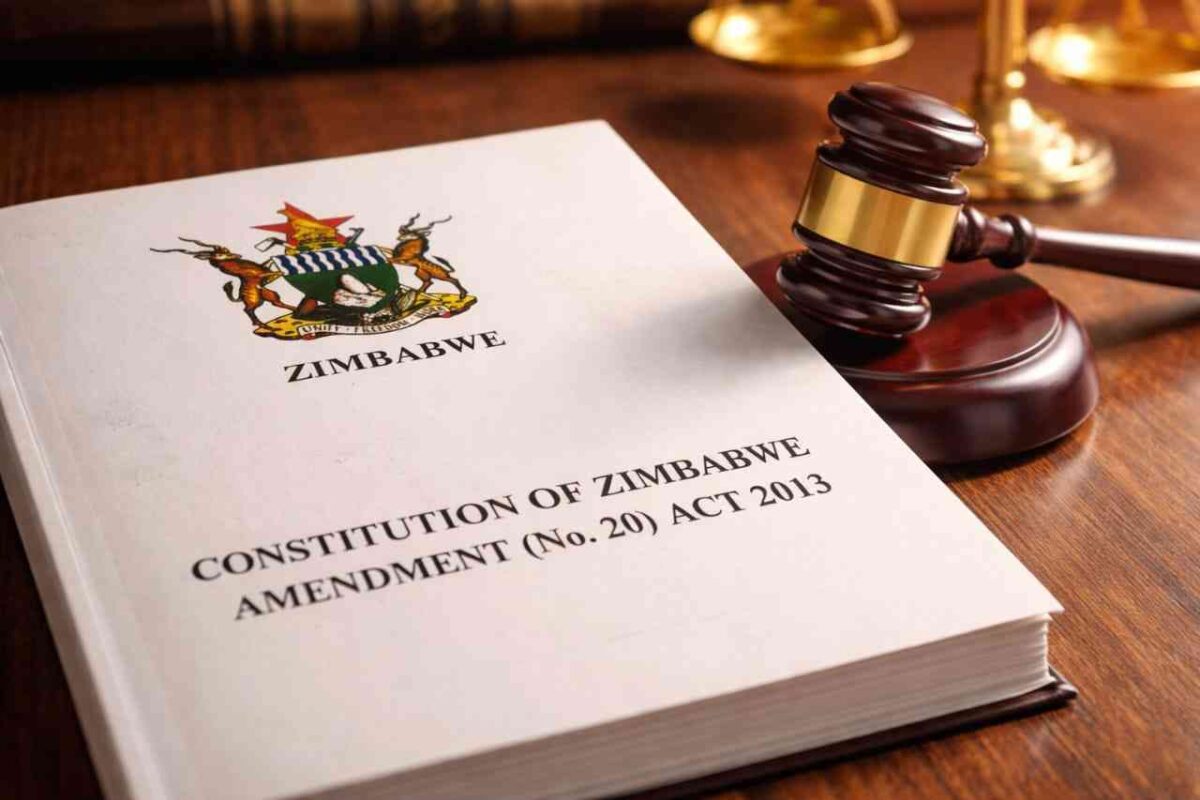
The Bill has sparked national debate as it seeks to amend key provisions of Zimbabwe’s Constitution, including those related to presidential term limits, judicial appointments and the electoral framework.
Critics argue the process has not been sufficiently transparent or inclusive, with citizens noting they are not allowed to freely participate in consultations.
In an interview with CITE, Dlamini said the introduction of the Bill has coincided with a marked shift in the government’s posture toward citizens.
“The government now, after it introduced the Constitutional Amendment Bill No. 3, has become aggressive and dangerous,” he said.
“It does not want to see people, even three people moving as a team. They think that we are planning against this CA3.”
The ZAPU national chair warned the political situation could deteriorate further, potentially affecting even routine social and religious activities.
“I foresee a situation where even going to churches, you have to apply, you have to get permission from somewhere,” Dlamini said.
“Even going for a funeral, burying your relative, we now have to ask for permission.”
According to Dlamini, the prevailing atmosphere reflects a government gripped by fear and suspicion.
“Zanu is afraid of what it has created. You can see it’s cracking apart and everyone is now a suspect in this country. We are no longer free,” he said.
Dlamini’s remarks echo concerns raised in recent reports questioning the legality of limiting gatherings for discussions around the constitutional amendments, with critics arguing such measures undermine democratic participation and constitutional rights.
The funeral of Nketa, himself a former ZAPU official and liberation war veteran, has also become a flashpoint, with ZAPU accusing the ruling party of attempting to dominate proceedings while sidelining those who were politically aligned with the deceased.
Dlamini said even at Nketa’s funeral wake, ZAPU members and the media faced restrictions.
“When you came here, you could write three books about what you saw,” he told journalists. “We were not even allowed to talk to you. You were not allowed to interview us until we had to beg. This is because of intimidation.”
He further claimed that Nketa’s family had been pressured into limiting ZAPU’s involvement.
“This family has been highly intimidated,” Dlamini said.
“They have been promised money. Poor people will always think there is something to gain because Zanu is flashing money everywhere.”
Dlamini also questioned the government’s sudden interest in Nketa following his death, saying the late colonel had not been recognised or supported during his lifetime.
“Before, there was no Nketa in their plans. But today they have Nketa because he is dead,” he said.
“We know the reason, it is for political mileage.”
The national chair said Nketa had remained loyal to ZAPU and its ideals throughout his life, despite opportunities to align with other political formations.
“Cde Nketa did not work for Zanu. He did not work for any other opposition party. He chose ZAPU because of its policies, policies that are democratic, that focus on development, unity and equality. Policies that don’t accept tribalism and regionalism.,” Dlamini said.
Reflecting on Nketa’s liberation war credentials, Dlamini noted he joined the struggle in 1975 and trained in Tanzania and Morocco before serving as a commander in ZPRA.
After independence, Nketa served in the Zimbabwe National Army, including deployment in the Democratic Republic of Congo, where Dlamini said he commanded troops.
“I worked with him in the army and later in the DRC. He was a professional soldier, very humble, but firm,” Dlamini said.
However, he claimed that Nketa’s career progression in the army was hindered, alleging that less qualified individuals were promoted ahead of him.
“To my surprise, his promotion was very slow, despite his education and capabilities,” he said. “Some people who were not even educated were promoted ahead of him.”
Dlamini said these experiences, combined with broader grievances over the treatment of former ZPRA cadres, contributed to Nketa’s decision to retire and later rejoin ZAPU during its revival.
Dlamini also revisited longstanding disputes over properties and resources linked to ZAPU and ZPRA, lamenting how assets contributed by cadres during the liberation struggle were seized.
“We contributed money at assembly points, believing it would be invested for our benefit,” he said.
“But all those properties were taken. Our families are not benefiting from anything today.”
Dlamini said ZAPU would not be deterred from speaking out, either on the amendment bill or on what it views as injustices affecting its members.
“We will push harder until such time that Zanu breaks down,” he said.
“And it will break down, we can see the cracks. They are fighting among themselves.”