Gambia reaffirms global leadership on safe migration at IMRF 2026
The Gambia is a GCM Champion Country and was among 164 UN Member States that adopted the Global Compact on 19 December 2018. The move reaffirmed multilateral cooperation, human rights protection, and stronger migration governance. Since adoption, The Gambia has recorded progress in remittances, Diaspora engagement, public awareness, border management, migrant protection, and return and reintegration. Financial innovation and digital solutions have improved remittance systems, boosting their impact on households and the economy. Reintegration programmes support returnees with livelihood assistance, skills training, and psychosocial services for sustainable community reintegration. Government-led public awareness campaigns have improved understanding of migration risks and opportunities, especially among youth and high-migration communities. The Gambia has mainstreamed migration into the Recovery-Focused National Development Plan 2023–2027 and is developing a National Migration Strategy to align migration governance with socio-economic priorities. Civil society, the private sector, media, and Diaspora actors have helped build a more inclusive migration governance framework, improving outreach, service delivery, and innovation. Further progress includes tackling trafficking in persons and migrant smuggling through better border coordination, victim protection, capacity-building, and legal reforms. The report followed a structured, consultative process led by the National Coordination Mechanism on Migration, with technical support from IOM and the UN Network on Migration in The Gambia. Multi-stakeholder consultations in March–April 2026 included government ministries, UN entities, civil society through TANGO, media, academia, the private sector, trade unions, national human rights institutions, and groups representing persons with disabilities, including the Gambia Federation of the Disabled. Regional consultations captured sub-national perspectives on internal migration and community drivers. On the margins of IMRF 2026, The Gambia co-chaired a high-level side event, “Saving Lives and Missing Migrants: From Recommendations to Results,” on Tuesday, 5 May. Co-organised with Ecuador and the UN Network on Migration, with ICRC and IFRC as partners, the event focused on preventable migrant deaths. “Behind each statistic lies a human story — a life cut short and families left in uncertainty and grief,” Minister Njie said. “These tragedies are preventable and require urgent, collective action.” The Government reiterated its commitment to strengthening partnerships at national, regional, and global levels to ensure migration remains safe, orderly, and beneficial for all. It will continue working with all stakeholders to advance GCM objectives and harness migration’s positive contributions to national development. (Source: Foreign Affairs Ministry)
 Black News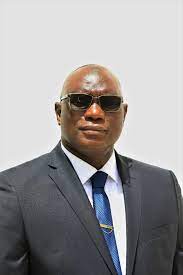

The Gambia is a GCM Champion Country and was among 164 UN Member States that adopted the Global Compact on 19 December 2018. The move reaffirmed multilateral cooperation, human rights protection, and stronger migration governance.
Since adoption, The Gambia has recorded progress in remittances, Diaspora engagement, public awareness, border management, migrant protection, and return and reintegration.
Financial innovation and digital solutions have improved remittance systems, boosting their impact on households and the economy. Reintegration programmes support returnees with livelihood assistance, skills training, and psychosocial services for sustainable community reintegration.
Government-led public awareness campaigns have improved understanding of migration risks and opportunities, especially among youth and high-migration communities.
The Gambia has mainstreamed migration into the Recovery-Focused National Development Plan 2023–2027 and is developing a National Migration Strategy to align migration governance with socio-economic priorities.
Civil society, the private sector, media, and Diaspora actors have helped build a more inclusive migration governance framework, improving outreach, service delivery, and innovation.
Further progress includes tackling trafficking in persons and migrant smuggling through better border coordination, victim protection, capacity-building, and legal reforms.
The report followed a structured, consultative process led by the National Coordination Mechanism on Migration, with technical support from IOM and the UN Network on Migration in The Gambia.
Multi-stakeholder consultations in March–April 2026 included government ministries, UN entities, civil society through TANGO, media, academia, the private sector, trade unions, national human rights institutions, and groups representing persons with disabilities, including the Gambia Federation of the Disabled. Regional consultations captured sub-national perspectives on internal migration and community drivers.
On the margins of IMRF 2026, The Gambia co-chaired a high-level side event, “Saving Lives and Missing Migrants: From Recommendations to Results,” on Tuesday, 5 May. Co-organised with Ecuador and the UN Network on Migration, with ICRC and IFRC as partners, the event focused on preventable migrant deaths.
“Behind each statistic lies a human story — a life cut short and families left in uncertainty and grief,” Minister Njie said. “These tragedies are preventable and require urgent, collective action.”
The Government reiterated its commitment to strengthening partnerships at national, regional, and global levels to ensure migration remains safe, orderly, and beneficial for all.
It will continue working with all stakeholders to advance GCM objectives and harness migration’s positive contributions to national development. (Source: Foreign Affairs Ministry)