Kuwait's new labor rules shut out workers from Nigeria, Kenya and 22 other African countries
Kuwait has introduced sweeping new restrictions on the recruitment of domestic workers, effectively shutting out applicants from Nigeria, Kenya and 22 other African countries, as well as two Asian nations, under a revised labour policy tightening access to one of the Gulf’s key employment corridors.
 Black News

Kuwait has introduced sweeping new restrictions on the recruitment of domestic workers, effectively shutting out applicants from Nigeria, Kenya and 22 other African countries, as well as two Asian nations, under a revised labour policy tightening access to one of the Gulf’s key employment corridors.
- Kuwait has implemented new restrictions on hiring domestic workers, excluding applicants from 24 African nations, along with two Asian countries.
- The measure was adopted after recommendations from several government agencies and aims to increase administrative control over domestic worker recruitment.
- The revised policy permits recruitment only from a limited list of countries, such as South Africa, Eritrea, Ethiopia among others.
- The ban affects major African labour-sending countries such as Nigeria, Kenya, Uganda, Rwanda, Mali, Cameroon, the DRC among others
According to a circular issued by Kuwait’s Interior Ministry, domestic workers may now only be recruited from select countries including South Africa, Benin, Eritrea, Ethiopia, the Philippines, Sri Lanka, India, Vietnam and Nepal. Recruitment from Senegal is permitted but restricted to male workers only.
The directive, which took effect shortly after being updated, also bars recruitment from a wide range of African countries including Nigeria, Kenya, Uganda, Togo, Malawi, Chad, Djibouti, Niger, Guinea, Guinea-Bissau, Cabo Verde, Sierra Leone, Liberia, Mali, Burkina Faso, Gambia, Cameroon, Equatorial Guinea, the Central African Republic, the Republic of the Congo, the Democratic Republic of the Congo, Rwanda, Burundi, Angola, as well as the Asian countries of Madagascar and Bhutan.
DON'T MISS THIS: UAE suspends tourist and work visas for five African countries, effective 2026
The measure was adopted following recommendations from several government bodies, including the Ministry of Foreign Affairs, the Ministry of Health, and the Public Authority for Manpower, according to local reports.
Officials say recruitment procedures will now be handled through designated governorates as part of tighter administrative oversight of the domestic labour sector.
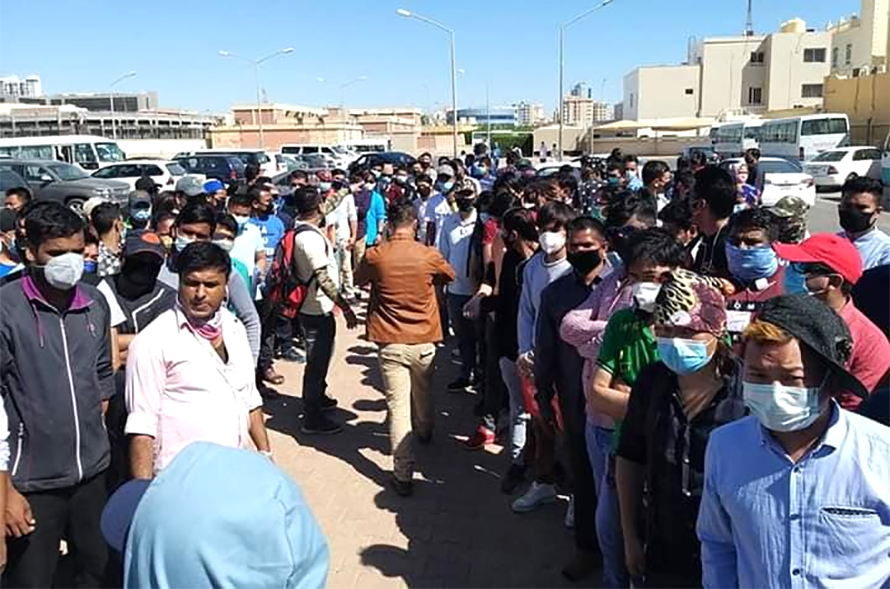
A tightening Gulf labour corridor
For decades, Gulf Cooperation Council (GCC) states have served as major destinations for African migrant workers, particularly in domestic work, construction, and low-skilled service sectors.
However, African workers have increasingly faced stricter visa regimes, nationality-based recruitment caps, and evolving bilateral labour agreements that determine access to Gulf labour markets.
Across Gulf states, governments have gradually tightened labour mobility rules, citing concerns over regulatory compliance, worker protection frameworks, and diplomatic labour agreements with sending countries.
In practice, this has led to uneven access for African labour-exporting nations, many of which lack formalised recruitment agreements or face concerns over documentation and oversight systems.
DON'T MISS THIS: South Africa, Seychelles, Mauritius and Canada face shorter visa-free stays in Thailand over crime and illegal work
These restrictions come at a time when remittances remain a critical source of foreign exchange for several African economies, making access to Gulf labour markets economically significant beyond employment alone.
For many African workers, the latest Kuwaiti policy adds to a broader pattern of tightening entry conditions in Gulf labour markets, where nationality, skill category, and bilateral relations increasingly determine access opportunities.
As Gulf economies continue to reform labour systems, African countries are likely to face growing pressure to renegotiate recruitment frameworks to preserve access for their workers in key overseas job markets.