Museveni: Africa’s 3rd ‘Dancer Who Never Leaves The Floor’
By Tom Oniro Elenyu Photos: YouTube Screenshots|Wikimedia Commons Once upon a time, Gen Yoweri Museveni asked critics of his old age and longevity in power, thus, laconically; “Do I look like I am about to collapse?” A teetotal, Museveni prides in feeding on traditional African foods; including millet bread. In fact, his adherence to the preservation of traditional African seeds for local food varieties has seen the shelving of The Genetic Engineering Regulatory Act, 2018 enacted by Parliament on November 28, 2018 awaiting his signature on the dotted lines. Although traces of Genetically-Modified Organisms (GMOs) are already reported in Uganda, Museveni rejected two prior Bills seeking to introduce GMOs in the country preceding the enacted and now shelved one. It is said Africans have better body cells because of eating organic foods. During COVID-19 lockdowns, he went live on TV showing people how to keep fit through push-ups. He also claims to be a prolific footballer. From Museveni’s handlers, whoever attacked his now Octagenarism—which has allegedly bestowed upon young people a sense of immortality—got a curt and rather sarcastic reply: “Don’t you have old people in your clan? Have you killed all the old people in your clan or village?” Too choking to be answered. In the mold of Cameroon’s 93-year-old Paul Biya and Equatoguinean 84-year-old Teodoro Obiang Nguema Mbasogo, the September 1944-born Museveni now officially begins his Great Trek of eventually becoming—and actually being—Africa’s third non-stop sitting longest-serving and surviving leader. He catapulted to power on January 26, 1986 after a five-year protracted guerrilla war. Obiang Nguema has presided over Equatorial Guinea since 1979. Biya, on the other hand, has ruled Cameroon from 1982. The Electoral Commission declared incumbent Museveni winner of the January 15 presidential polls with 71.65% of the total valid votes cast. Runner-up Robert Kyagulanyi, or Bobi Wine managed 24%. Six other fringe candidates trailed in the distant horizon. “[Grandchildren], me grandfather, I am still here…I am going to educate you,” Museveni started in his seventh term inauguration speech on May 12. “Your Excellencies, I am telling these young people; they don’t know much of the history…So, never forget Tanzania. Then, Mozambique together with Mwalimu [Julius Nyerere] are the ones who helped us build these forces that you are seeing here,” he implored. Tanzania’s President Samia Suluhu Hassan and Mozambique’s Daniel Chapo were in attendance. Museveni started his military forays and guerrilla activities in Mozambique. Former Tanzanian president Nyerere gave sanctuary to Ugandan rebel exiles including Museveni in the aftermath of the then army commander Idi Amin overthrowing Uganda’s post-independence Milton Obote government on January 25, 1971. Nyerere subsequently helped Ugandan rebel exiles drive Amin out of power on April 11, 1979. “This term [of office May 12, 2026-May 12, 2031],” Museveni said, “should be regarded as a term of no more sleep for all Ugandans. Yes, there are poor people in Uganda, but there are also rich ones who listened and came up with those houses [shown on screen to illustrate his wealth creation ideals]. The NRM [his ruling National Resistance Movement] has put up seven bricks on Ugandans in the last 40 years—peace, development in the form of economic and social infrastructure, wealth, jobs, service delivery, markets [and services sector like hotels].” Museveni claimed that in 2013, 32% of Ugandans were outside the money economy, but with the onset of his February 2022-launched Parish Development Model, “only 33% of the people are outside the money economy”. With the enactment of the Protection of the Sovereignty Act on May 5 now awaiting Museveni’s assent, however; outgoing lawmaker Ibrahim Ssemujju Nganda says Ugandans should “brace for the worst” in the next the five years ahead. Reviewing Museveni’s last five years (sixth term 2021-2026), on Kampala’s Radio One’s Spectrum talk show on May 11, Kyambogo University’s Head of History Department, Archaeology and Heritage, Dr Robert Ojiambo says: “And this has become his song. I don’t know when he is going to launch it,” Ojiambo on Museveni ending corruption in his 2021 inauguration speech. “Corruption; the President has been talking about this issue, but in these five years [2021-2026], corruption has been ugly…So, in that area, the situation has become even worse.” Invited members of the political opposition boycotted the swearing-in ceremony. According to the Ombudsman, by 2023, corruption siphons from Uganda’s coffers about US$2.8 billion annually. “No more corruption; no more corruption; no more sleep,” Museveni wound up his speech. “Corruption is the software that runs the hardware of this government,” says Ojiambo. Ojiambo credits Museveni on the area of security and stability; “the President has done very well—the security of
 Black News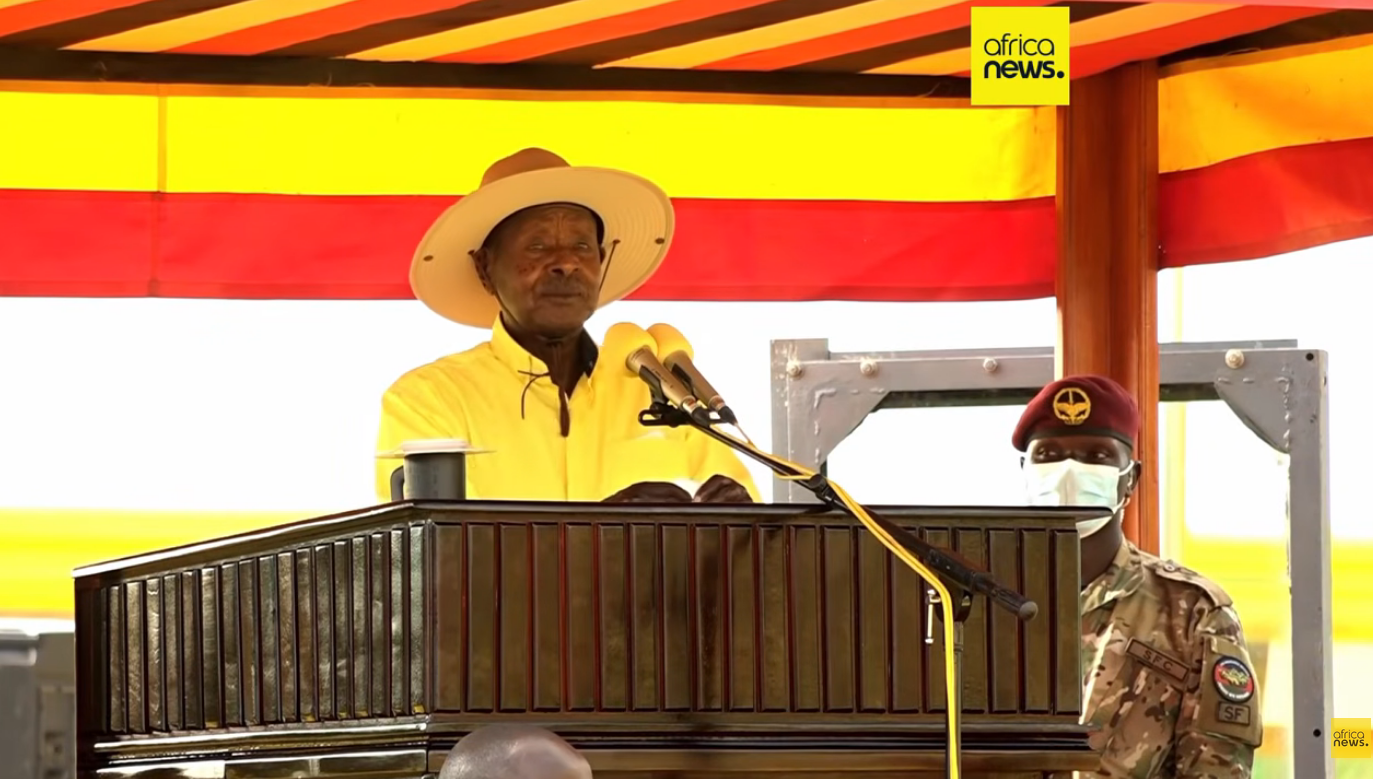
By Tom Oniro Elenyu
Photos: YouTube Screenshots|Wikimedia Commons
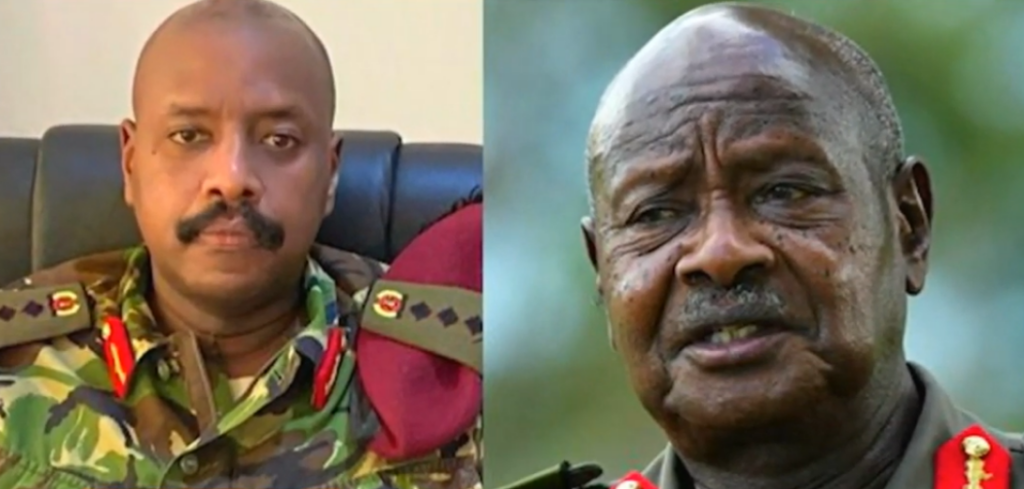
Once upon a time, Gen Yoweri Museveni asked critics of his old age and longevity in power, thus, laconically; “Do I look like I am about to collapse?” A teetotal, Museveni prides in feeding on traditional African foods; including millet bread. In fact, his adherence to the preservation of traditional African seeds for local food varieties has seen the shelving of The Genetic Engineering Regulatory Act, 2018 enacted by Parliament on November 28, 2018 awaiting his signature on the dotted lines.
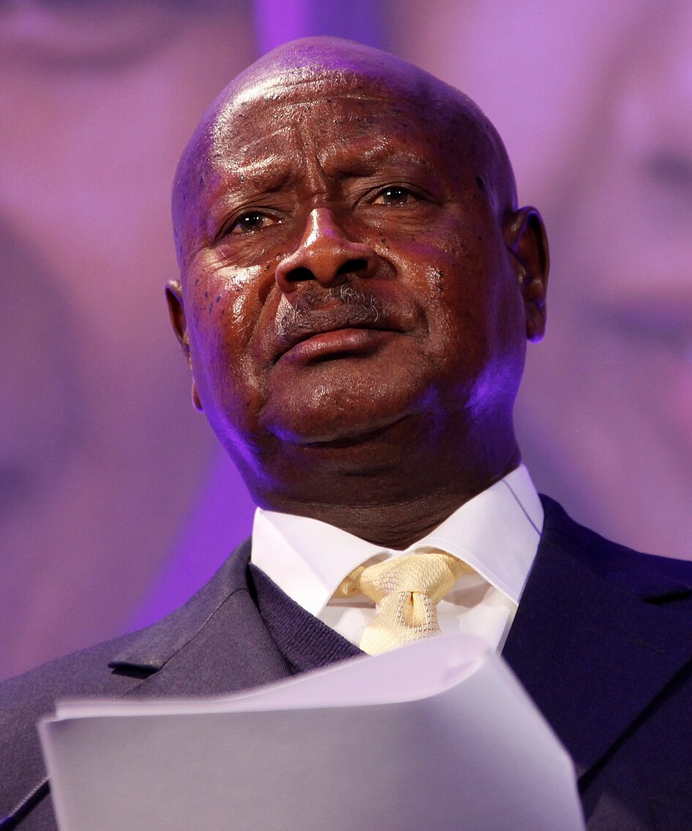
Although traces of Genetically-Modified Organisms (GMOs) are already reported in Uganda, Museveni rejected two prior Bills seeking to introduce GMOs in the country preceding the enacted and now shelved one. It is said Africans have better body cells because of eating organic foods. During COVID-19 lockdowns, he went live on TV showing people how to keep fit through push-ups. He also claims to be a prolific footballer.
From Museveni’s handlers, whoever attacked his now Octagenarism—which has allegedly bestowed upon young people a sense of immortality—got a curt and rather sarcastic reply: “Don’t you have old people in your clan? Have you killed all the old people in your clan or village?” Too choking to be answered.
In the mold of Cameroon’s 93-year-old Paul Biya and Equatoguinean 84-year-old Teodoro Obiang Nguema Mbasogo, the September 1944-born Museveni now officially begins his Great Trek of eventually becoming—and actually being—Africa’s third non-stop sitting longest-serving and surviving leader. He catapulted to power on January 26, 1986 after a five-year protracted guerrilla war.
Obiang Nguema has presided over Equatorial Guinea since 1979. Biya, on the other hand, has ruled Cameroon from 1982.
The Electoral Commission declared incumbent Museveni winner of the January 15 presidential polls with 71.65% of the total valid votes cast. Runner-up Robert Kyagulanyi, or Bobi Wine managed 24%. Six other fringe candidates trailed in the distant horizon.
“[Grandchildren], me grandfather, I am still here…I am going to educate you,” Museveni started in his seventh term inauguration speech on May 12. “Your Excellencies, I am telling these young people; they don’t know much of the history…So, never forget Tanzania. Then, Mozambique together with Mwalimu [Julius Nyerere] are the ones who helped us build these forces that you are seeing here,” he implored.
Tanzania’s President Samia Suluhu Hassan and Mozambique’s Daniel Chapo were in attendance. Museveni started his military forays and guerrilla activities in Mozambique. Former Tanzanian president Nyerere gave sanctuary to Ugandan rebel exiles including Museveni in the aftermath of the then army commander Idi Amin overthrowing Uganda’s post-independence Milton Obote government on January 25, 1971. Nyerere subsequently helped Ugandan rebel exiles drive Amin out of power on April 11, 1979.
“This term [of office May 12, 2026-May 12, 2031],” Museveni said, “should be regarded as a term of no more sleep for all Ugandans. Yes, there are poor people in Uganda, but there are also rich ones who listened and came up with those houses [shown on screen to illustrate his wealth creation ideals]. The NRM [his ruling National Resistance Movement] has put up seven bricks on Ugandans in the last 40 years—peace, development in the form of economic and social infrastructure, wealth, jobs, service delivery, markets [and services sector like hotels].”
Museveni claimed that in 2013, 32% of Ugandans were outside the money economy, but with the onset of his February 2022-launched Parish Development Model, “only 33% of the people are outside the money economy”.
With the enactment of the Protection of the Sovereignty Act on May 5 now awaiting Museveni’s assent, however; outgoing lawmaker Ibrahim Ssemujju Nganda says Ugandans should “brace for the worst” in the next the five years ahead.
Reviewing Museveni’s last five years (sixth term 2021-2026), on Kampala’s Radio One’s Spectrum talk show on May 11, Kyambogo University’s Head of History Department, Archaeology and Heritage, Dr Robert Ojiambo says: “And this has become his song. I don’t know when he is going to launch it,” Ojiambo on Museveni ending corruption in his 2021 inauguration speech. “Corruption; the President has been talking about this issue, but in these five years [2021-2026], corruption has been ugly…So, in that area, the situation has become even worse.”
Invited members of the political opposition boycotted the swearing-in ceremony.
According to the Ombudsman, by 2023, corruption siphons from Uganda’s coffers about US$2.8 billion annually. “No more corruption; no more corruption; no more sleep,” Museveni wound up his speech.
“Corruption is the software that runs the hardware of this government,” says Ojiambo.
Ojiambo credits Museveni on the area of security and stability; “the President has done very well—the security of the State; but the security of the individual is a very; very big problem”.
Ojiambo’s parting shot: “The President has done a lot for this country in the last 40 years. Next, he has to start thinking of giving power to the next young man. The curve is going down and he needs to do that.”
And although it is said the best dancers also leave the dance floor, Museveni now swears-in the Great Trek of being the third longest-serving leader in Africa in the footsteps of Obiang Nguema and Biya.