Report: Nigeria loses $13bn annually to fiscal indiscipline as calls to rewrite revenue laws deepen
A senior Nigerian legal practitioner has warned that the country is losing an estimated N20 trillion (about $13.3 billion) annually to fiscal leakages, calling for urgent constitutional reforms to strengthen revenue management and curb financial mismanagement.
 Black News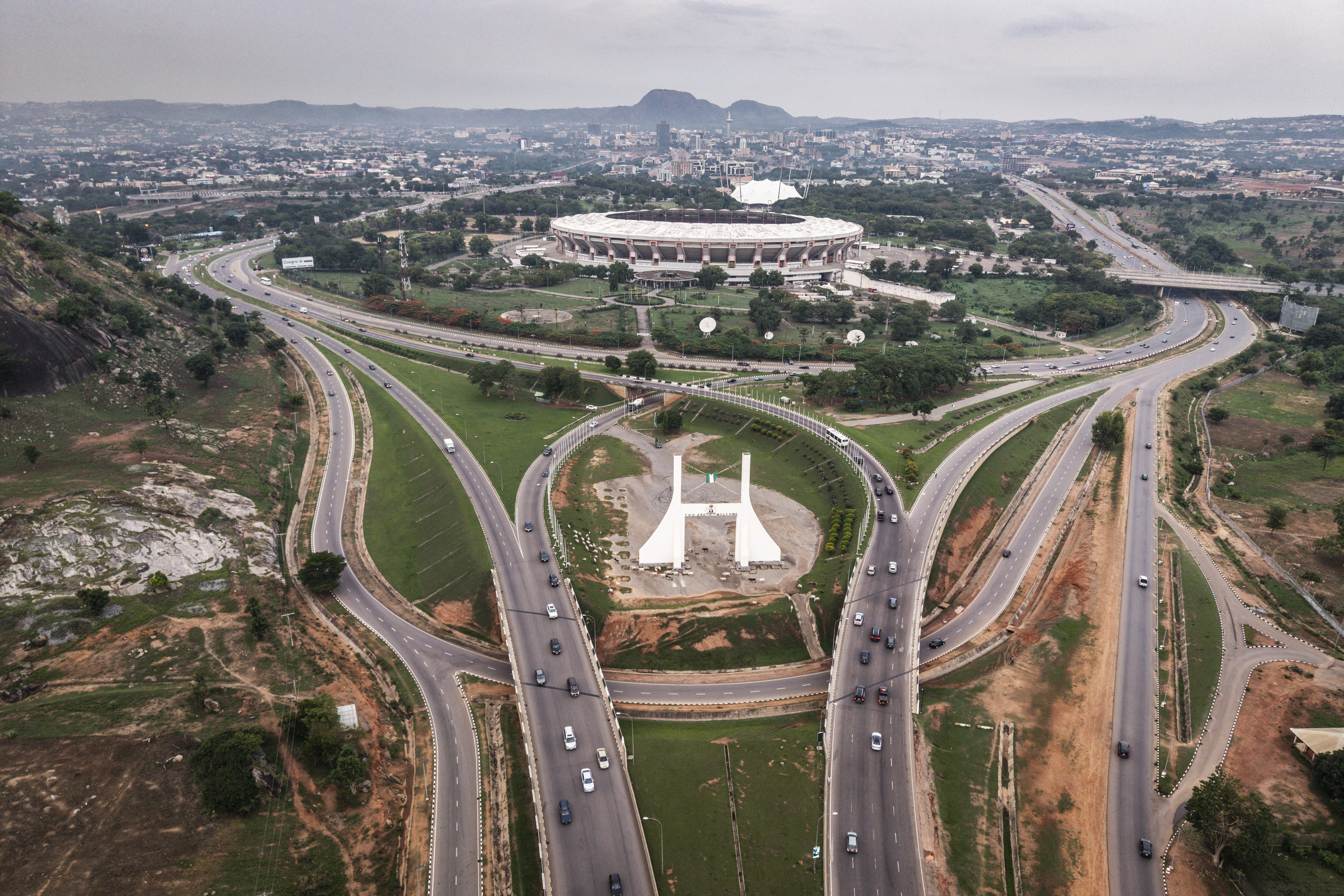
![A general view of Abuja city gate in Abuja, on May 20, 2025. [Photo by OLYMPIA DE MAISMONT/AFP via Getty Images]](https://ocdn.eu/pulscms/MDA_/f78789b5209d1263d08d14d86aaaffcf.jpg)
A senior Nigerian legal practitioner has warned that the country is losing an estimated N20 trillion (about $13.3 billion) annually to fiscal leakages, calling for urgent constitutional reforms to strengthen revenue management and curb financial mismanagement.
- A leading Nigerian legal expert has warned that the country is losing an estimated $13.3 billion annually to systemic fiscal leakages.
- Olisa Agbakoba argues that weak enforcement of Section 162 of the Constitution is enabling widespread revenue diversion.
- He is calling for constitutional amendments to ensure all federal revenues are fully remitted into the Federation Account.
- The proposal also includes major institutional reforms ahead of Nigeria’s 2027 elections.
Olisa Agbakoba, Senior Advocate of Nigeria and former President of the Nigerian Bar Association, made the remarks in a policy paper released on Thursday, May 7, 2026, where he argued that Nigeria’s fiscal framework is being undermined by weak enforcement of constitutional provisions governing public revenue.
At the centre of his argument is Section 162(1) of the Nigerian Constitution, which mandates that all federally collected revenue be paid into the Federation Account.
Agbakoba said the provision is being ignored in practice, despite being clear in law. “Section 162(1) of the Constitution provides as follows: ‘The Federation shall maintain a special account to be called the Federation Account into which shall be paid all revenues collected by the Government of the Federation.’ This is the law, but it is not being followed,” he said.
He acknowledged past reforms such as the Treasury Single Account introduced under former Finance Minister Ngozi Okonjo-Iweala, which consolidated government revenues into a single system to improve transparency. However, he argued that the initiative, while impactful, lacks constitutional backing.
“It was a well-intentioned reform. But the Treasury Single Account is not Section 162. It was introduced by executive directive, not by law,” Agbakoba said, adding that leakages have persisted despite the policy.
He estimated that Nigeria continues to lose up to N20 trillion annually, roughly $13.3 billion, based on current exchange estimates using Forbes currency conversion benchmarks, in revenues that should enter the Federation Account.
Call for review of revenue laws
![Senior Nigerian legal practitioner Olisa Agbakoba warns that Nigeria loses about $13.3 billion annually to fiscal leakages and calls for urgent constitutional reforms to strengthen public revenue management. [Olisa Agbakoba, SAN/Facebook]](https://ocdn.eu/pulscms/MDA_/d69a1103a3c6b33c9a99a09f0f011bca.jpg)
To address the challenge, Agbakoba proposed a constitutional amendment to strengthen enforcement and close loopholes that allow diversion before funds reach the federation pool. He called for all revenues to be remitted in full without deductions prior to transfer, with expenditure approvals handled only after payment into the account.
“All revenues accruing to the federation shall be paid into the federation account in gross,” he said, adding that no executive policy should be allowed to create alternative structures to the constitutionally recognised account.
He argued that such reforms would help address systemic leakages at the source if properly implemented and enforced.
Beyond fiscal policy, Agbakoba urged that economic governance become a central issue ahead of Nigeria’s 2027 elections, warning that public indifference among political leaders is worsening poverty levels.
He also criticised infrastructure management, describing the Apapa Port as “technically dead” and questioning the effectiveness of reported government borrowing aimed at its rehabilitation.
In a broader critique of governance and democratic participation, he raised concerns about voter awareness and the quality of electoral decision-making in Nigeria, questioning whether the current democratic model adequately reflects societal realities.
“Not all Nigerians have the intellectual capacity to vote,” he said, while also questioning whether democracy as currently practised is suited to African contexts.
On the petroleum sector, Agbakoba called for the scrapping of the Nigerian National Petroleum Company Limited (NNPC Ltd), arguing that it has become overly powerful relative to the state. He proposed listing it publicly as a means of restructuring.
“The Corporation is effectively dead. The government should list it on the stock market and reduce it to a PLC,” he said, adding that “NNPC Ltd today is more powerful than the Nigerian government.”