It’s not personal, it’s business
Black commentators and political leaders rarely use their platforms to address foreign policy issues. It’s as though what happens outside the borders of the United States doesn’t affect the approximately 50 million Black people who live here. Black leadership then assumes whatever white people in the United States say about the world, they’re speaking for […] The post It’s not personal, it’s business appeared first on St. Louis American.
 Black News

Black commentators and political leaders rarely use their platforms to address foreign policy issues. It’s as though what happens outside the borders of the United States doesn’t affect the approximately 50 million Black people who live here. Black leadership then assumes whatever white people in the United States say about the world, they’re speaking for us also — and we’re OK with that. That’s a subject for another column. This column is specifically about the war.
To provide some context, the United States will commemorate the 250th anniversary of the signing of the Declaration of Independence in July. That’s how old the United States is. Iran, on the other hand, is one of the world’s oldest continuous civilizations, with roots as a unified empire dating back to 625 B.C.
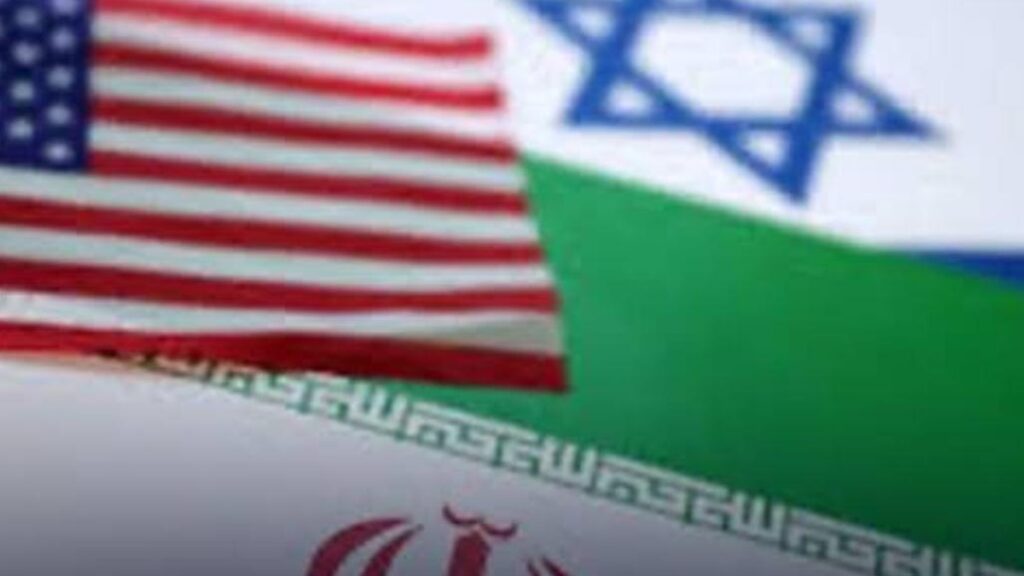
But the issue isn’t historical legitimacy. It’s how the events of the last seven weeks came to pass. The short answer, in two words: Donald Trump. The reason you’re paying $4 a gallon for gas — Donald Trump. The reason the Strait of Hormuz is closed and the world is facing an imminent energy crisis — Donald Trump. You get the idea.
In January 2025, there was an international agreement about Iran’s nuclear development signed by Iran, the United States, the European Union, Russia and China — everybody signed it. Everybody wasn’t happy, but everybody was cool.
At the beginning of February this year, the Strait of Hormuz was open and 100 cargo ships a day were passing through, hassle-free and without charge.
On Feb. 28, Trump chose to go to war with Iran. Now Iran controls the Strait of Hormuz and nobody’s going through it. I’m not being hyperbolic when I say every problem the United States is confronting right now is because Donald Trump is president of the United States.
That proposition begs a question that deserves an answer: How does somebody like Donald Trump become president of the United States — not just once, but twice? That question also has a two-word answer: white America.
Donald Trump is president because in November 2024 the majority of white Americans voted for him. Said another way, but for white America, the people of the United States and the world would not be suffering the consequences of a Trump presidency. But I don’t want you to take my word for it. The numbers can speak for themselves.
The racial profile of America circa 2024: White Americans were the largest group, approximately 56% to 59%, with an estimated 190 million to 200 million people. Black Americans were approximately 12% to 14%, with an estimated population between 40 million and 49 million. Hispanics were 20%, with an estimated population between 65 million and 68 million. The Asian population was estimated at 7%, approximately 24 million people.
In the November 2024 general election, more than 155 million people — 64% of eligible voters — cast ballots, the second-highest turnout in more than 100 years. Here’s the profile of that turnout: 71% were white, 11% African American, 11% Hispanic and 3% Asian.
We know how many Americans there were in 2024, and we know the racial profile of the population. We also know how many people voted in the November 2024 presidential election, and we know the racial makeup of those voters. The question is who they voted for.
Here’s what that looked like: Black voters gave Harris 83% of their votes. Asian voters cast 57% of theirs for Harris, and Harris also got a majority of Hispanic voters — 52%. Donald Trump received 55% of the white vote, which made up 71% of the turnout, almost three times that of the other groups combined. That, along with the eccentricities of America’s Electoral College system, made Donald Trump the president.
What does it all mean? It means Donald Trump isn’t a mistake or an anomaly. He was the choice of a majority of white Americans. The first time they voted for him, they could have feigned ignorance. But Trump is nothing if not transparent, because he’s too shallow to be intellectual. So the second time, nobody gets to say they didn’t know. Like the fable about the snake, white America knew who he was when they picked him up.
This is where foreign policy comes into play. Henry Kissinger said countries don’t have friends — they have interests. This means it’s serious — everything is about business, nothing is personal. In that arena, there’s one character flaw that’s never forgiven or excused — becoming unreliable. A blind man could have seen Trump was unreliable — it’s who he is. It’s the failure to manage and contain the mistake of the Trump presidency that creates the reliability problem. But Trump is the hired help. He’s to blame, but he’s not responsible.
The presidency of Donald Trump is the responsibility of those who retained him. It’s white America that has the reliability problem. It’s white America on the hook for unhinged behavior that has disrupted the normal order of business. Right now, in rooms all over the world, there are meetings about how affairs can be rearranged without the necessity of the United States.
America is the problem because it can no longer be depended on to handle the business of the world. So people make other arrangements. Here’s something I’ll make book on: When the Strait of Hormuz reopens, it will be Iran the world accommodates, not the United States.
Mike Jones is a political analyst, columnist and member of the St. Louis American Editorial Board.
The post It’s not personal, it’s business appeared first on St. Louis American.