Museveni Backs Ntungamo Iron Plant as Uganda Tightens Grip on Raw Mineral Exports
President Yoweri Kaguta Museveni has reaffirmed Uganda’s hardline stance against the export of unprocessed minerals, throwing his weight behind a new iron ore processing plant in Ntungamo District in what signals a deeper push toward industrialisation and value addition. The President made the commitment during a meeting at State Lodge Nakasero with officials from Terra […] The post Museveni Backs Ntungamo Iron Plant as Uganda Tightens Grip on Raw Mineral Exports appeared first on Daily Star.
 Black News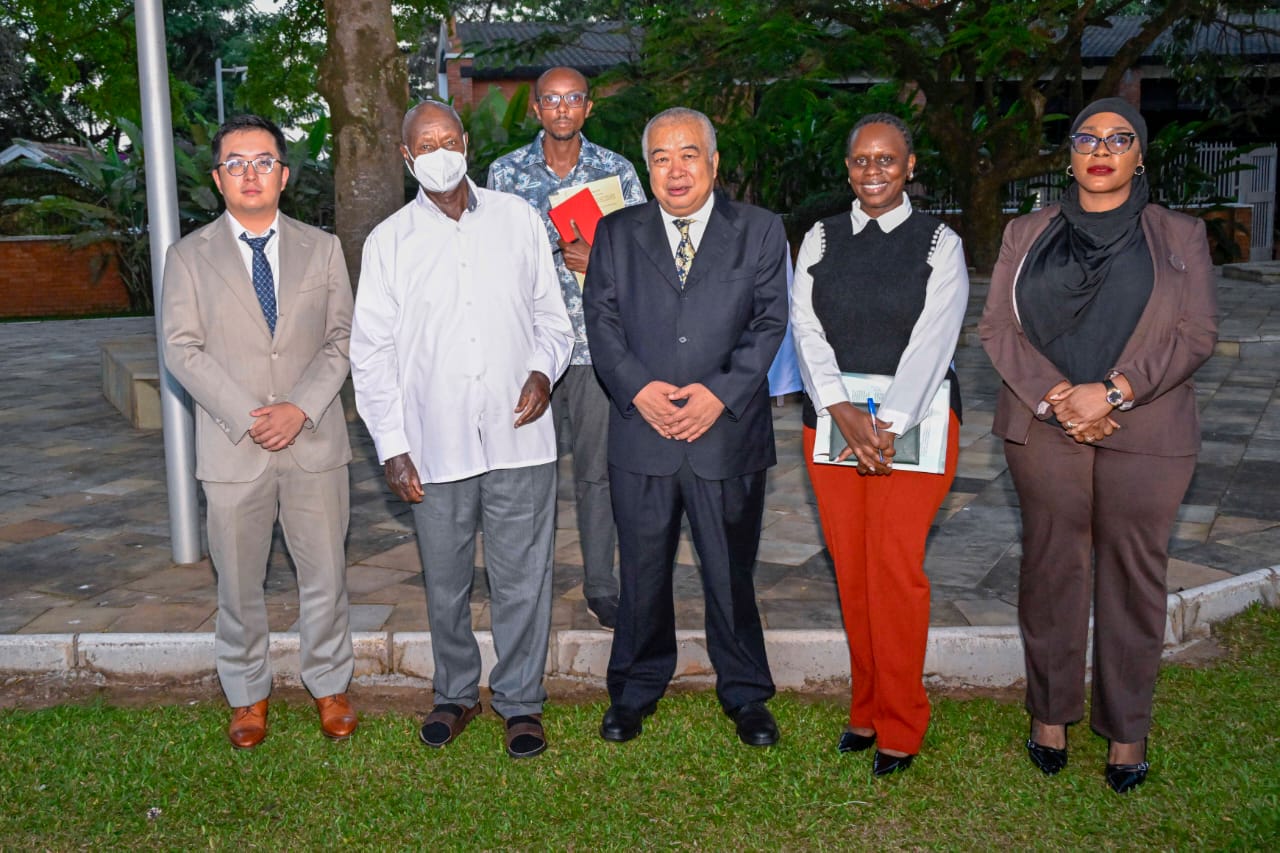
President Yoweri Kaguta Museveni has reaffirmed Uganda’s hardline stance against the export of unprocessed minerals, throwing his weight behind a new iron ore processing plant in Ntungamo District in what signals a deeper push toward industrialisation and value addition.
The President made the commitment during a meeting at State Lodge Nakasero with officials from Terra Industrial Development Company, a Chinese-backed firm behind what is being described as Uganda’s first pig iron processing facility in Rwenanura, Ntungamo District.
The project places Uganda a step closer to breaking its long-standing dependence on exporting raw materials, a practice Museveni has repeatedly criticised for depriving the country of jobs and revenue.
“I will support you. Remember, we banned the export of unprocessed minerals,” Museveni told the investors, underscoring a policy position that has increasingly shaped Uganda’s economic direction.
The Ntungamo facility is expected to play a pivotal role in transforming the country’s mining sector by enabling local processing of iron ore into pig iron, a key industrial input used in steel production. With a reported purity level of 93 percent, the plant ranks among the more advanced mineral processing operations currently running in Uganda.
Government officials view the development as more than just another industrial project. It is being framed as a cornerstone in Uganda’s ambition to position itself as a regional hub for metal processing and manufacturing.
For years, economists have warned that Uganda’s reliance on exporting raw minerals has come at a steep cost, effectively exporting jobs, industrial capacity, and potential tax revenue. The renewed enforcement of the mineral export ban, coupled with investments such as the Ntungamo plant, signals a shift toward retaining value within the domestic economy.
Yet even as the optimism builds, the project is exposing familiar structural challenges that continue to shadow Uganda’s industrial ambitions.
Investors pointed to persistent infrastructure bottlenecks that could slow down operations and limit expansion. Chief among these is the need for a stable and reliable electricity supply to sustain heavy industrial processes.
Transport infrastructure is another sticking point. The investors called for the urgent upgrade of a 4.2-kilometre road link connecting the Ntungamo–Mirama Hills road to the Kabale–Ntungamo highway, warning that its current state could hinder the efficient movement of raw materials and finished products.
Particular concern was raised over Kategure Bridge, which they say requires immediate rehabilitation to support heavy cargo traffic associated with industrial activity.
Museveni acknowledged the concerns and assured the investors that government would coordinate through relevant ministries and agencies to address the gaps, reiterating his long-held view that infrastructure development must move in lockstep with industrial growth.
Analysts say such assurances will be critical if Uganda is to convert policy ambition into tangible economic gains. While the country is endowed with significant mineral wealth, including iron ore, gold, copper, cobalt, limestone, and rare earth elements, the sector has historically remained underdeveloped in terms of value addition.
The Ntungamo project is therefore being watched closely as a test case for Uganda’s broader industrialisation strategy.
Beyond mining, Museveni also welcomed the investors’ footprint in Uganda’s health manufacturing sector through Sino-Africa Medical Devices, an affiliated company producing World Health Organization pre-qualified long-lasting insecticide-treated mosquito nets.
In a move that could further strengthen local industry, the President signaled that government may prioritise procurement of mosquito nets from domestic manufacturers rather than relying on imports.
The shift, if implemented, would not only support local production but also contribute to Uganda’s ongoing fight against malaria, one of the country’s leading public health challenges.
Officials say local manufacturing of such essential health commodities could reduce import costs, improve supply reliability, and create additional jobs within the country.
The meeting was attended by Terra Industrial Development Company Managing Director Kong Dong Sheng and Hajjat Amina Mukalazi, head of the State House Local Content Unit, which has been instrumental in linking foreign investors to local economic opportunities.
For Uganda, the Ntungamo iron processing plant is fast becoming a symbol of a broader economic recalibration.
It reflects a deliberate shift from exporting raw resources to building domestic industrial capacity, a transition that, if sustained, could redefine the country’s role in regional and global value chains.
But as the project moves from promise to practice, its success will likely depend not just on policy pronouncements, but on how quickly Uganda can resolve the infrastructure and operational challenges that have long constrained its industrial takeoff.
The post Museveni Backs Ntungamo Iron Plant as Uganda Tightens Grip on Raw Mineral Exports appeared first on Daily Star.