Southern states push for redistricting after US Supreme Court ruling on minority districts
Redistricting efforts in South Carolina, Alabama, Tennessee, and Louisiana aim to redraw majority-Black congressional districts, impacting minority voters and Republican lawmakers. The post Southern states push for redistricting after US Supreme Court ruling on minority districts appeared first on AFRO American Newspapers.
 Black News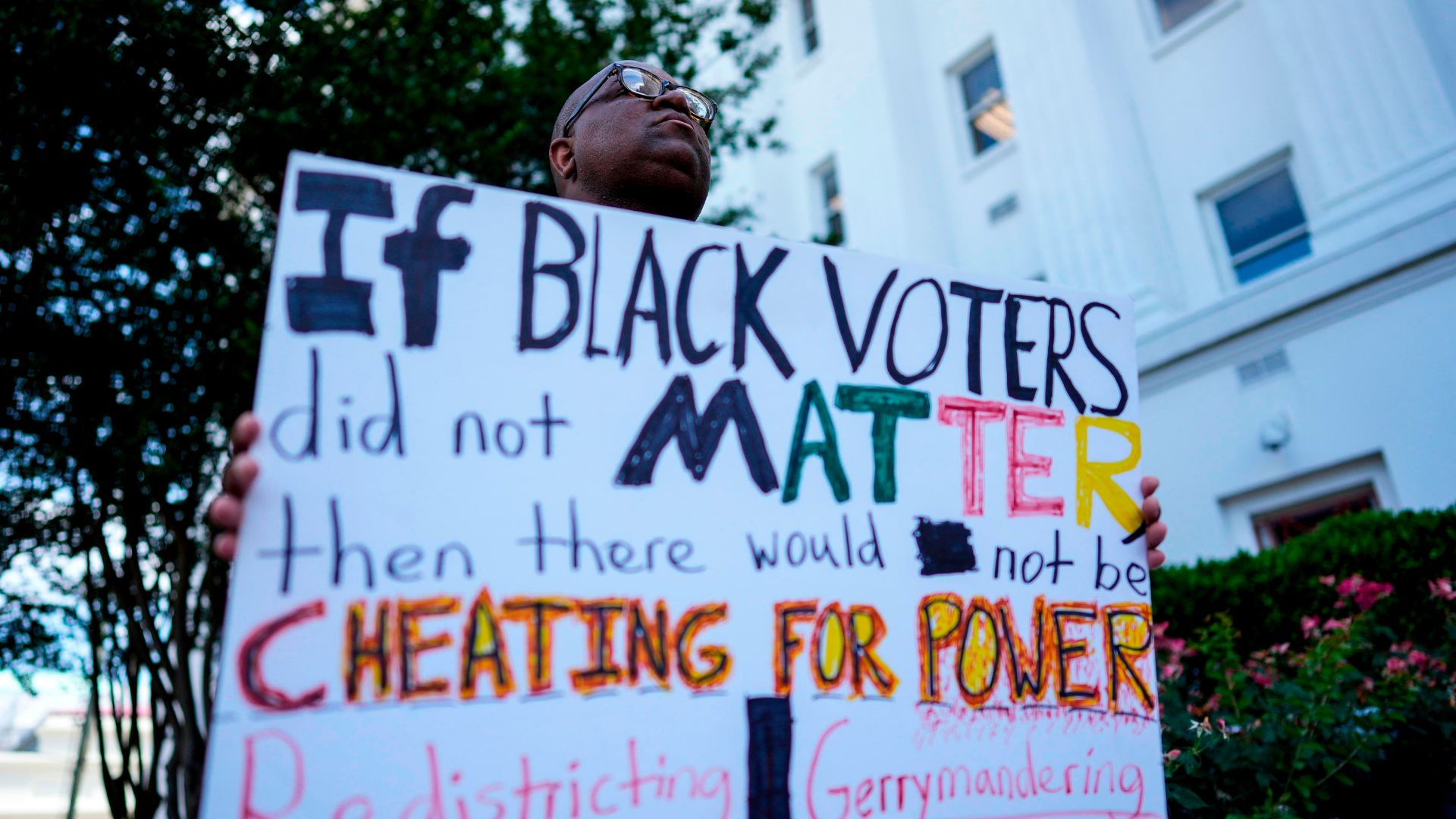

By Jeffrey Collins, Travis Loller, Kim Chandler and David A. Lieb
An election year redistricting movement has spread to South Carolina as Republicans attempt to redraw majority-Black congressional districts that have suddenly become susceptible because of a U.S. Supreme Court ruling upending protections for minority voters.

Urged on by President Donald Trump, South Carolina Republicans are attempting to redraw a district long held by a Black Democratic lawmaker in their quest for a clean sweep of the state’s seven congressional seats.
Lawmakers already are meeting in special sessions in Alabama and Tennessee in a bid to change their U.S. House districts. And Louisiana lawmakers are making plans for new congressional districts after the Supreme Court struck down the state’s current map on April 29.
The stakes are high for minority voters who stand to lose their preferred representatives and for any Republican lawmakers reluctant to follow Trump’s wishes. In Republican primary elections May 5, Trump-endorsed challengers defeated at least five of the seven Indiana state lawmakers targeted by Trump’s allies for refusing to support a congressional redistricting effort last year.
The Supreme Court’s recent ruling said Louisiana relied too heavily on race when creating a second Black-majority House district as it attempted to comply with the Voting Rights Act. The ruling significantly altered a decades-old understanding of the law, giving Republicans grounds to try to eliminate majority-Black districts that have elected Democrats.
The ruling revved up an already intense national redistricting battle ahead of a November midterm election that will determine control of the closely divided House.
Since Trump prodded Texas to redraw its U.S. House districts last year, a total of eight states have adopted new congressional districts. From that, Republicans think they could gain as many as 13 seats while Democrats think they could gain up to 10 seats. But some of the new districts could be competitive in November, meaning the parties may not get all they sought.

Jamiah Irby is removed by a state trooper from a Senate committee meeting during a special session of the state legislature to redraw U.S. Congressional voting maps Wednesday, May 6, 2026, in Nashville, Tenn. (AP Photo/George Walker IV) 
A demonstrator holds up a sign outside the Alabama Statehouse in Montgomery, Ala., on Thursday, May, 7 2026. (AP Photo/Kim Chandler) 
Rep. Justin J. Pearson, D-Memphis, second from left, walks with his brother KeShaun Pearson, as he is arrested and removed from the House gallery during a special session of the state legislature to redraw U.S. Congressional voting maps Thursday, May 7, 2026, in Nashville, Tenn. (AP Photo/George Walker IV) 
Wanda Mosley, left, protests in a House committee meeting during a special session of the state legislature to redraw U.S. Congressional voting maps Wednesday, May 6, 2026, in Nashville, Tenn. (AP Photo/George Walker IV) 
Democtaic Rep. Barbara Drummond speaks with Republican state Rep. Chris Pringle on HB 1, a redistricting bill, during a special session of the Alabama Legislature, Wednesday, May 6, 2026, in Montgomery, Ala. (AP Photo/Mike Stewart) 
Sen. Raumesh Akbari, D-Memphis, center right, speaks on the Senate chamber floor supported by her Democrat Senate colleagues during special session of the state legislature to redraw U.S. Congressional voting maps Tuesday, May 5, 2026, in Nashville, Tenn. (AP Photo/George Walker IV) 
Sen. London Lamar, D-Memphis, speaks during news conference before a special session of the state legislature to redraw U.S. Congressional voting maps Tuesday, May 5, 2026, in Nashville, Tenn. (AP Photo/George Walker IV)
South Carolina to test its will for redistricting
Democratic U.S. Rep. Jim Clyburn has represented South Carolina’s 6th Congressional District since it was redrawn to favor minority voters in 1992. He’s running for an 18th term. But it could get harder for him to win reelection if Republicans redraw his district.
A committee on May 6 easily passed a proposal that could allow South Carolina lawmakers to consider drawing new congressional districts, setting up a showdown on the state House floor later in the day.
The resolution would require a two-thirds vote to pass. Republicans have a supermajority, but some are concerned that an attempt to redraw the map to get rid of the state’s lone Democratic representative could backfire and create up to two districts where Democrats are competitive.
Democratic state Rep. Spencer Wetmore said the redistricting effort reveals cynical politics focused more on winning for a narrow group than on helping all people.
“Daddy Trump calls and needs to grasp at some power, and once again we jump,” she said.
The state’s primaries are June 9 and early voting starts in three weeks.
Tennessee plan targets Memphis district
Republicans on May 6 proposed a new U.S. House map that would split Memphis’ home of Shelby County among three districts, instead of the current two. The map would break up the state’s lone Democratic-held U.S. House district, centered on the majority-Black city of Memphis, creating a ripple effect of alterations to districts throughout the western and central parts of the state.
“Tennessee is a conservative state and our congressional delegation should reflect that. This bill ensures it does,” said Republican state Sen. John Stevens, who is spearheading the legislation.
To adopt new House districts, Tennessee lawmakers also are seeking to repeal a state law prohibiting mid-decade redistricting.
Democrats and civil rights activists denounced the efforts during legislative committee hearings May 6.
The proposed plan “is Black vote dilution at an industrial scale,” said Sekou Franklin, a political science professor at Middle Tennessee State University who is part of the Tennessee branch of the NAACP.
The candidate qualifying period in Tennessee ended in March, but legislation would reopen it to allow new candidates to join the races and existing candidates to switch districts. The primary election is scheduled for Aug. 6.
Thousands had already voted in Louisiana
After the Supreme Court’s April 29 decision, Republican Gov. Mike Landry postponed the state’s May 16 congressional primary to allow time for lawmakers to approve new U.S. House districts.
Louisiana voters had already sent in more than 41,000 absentee ballots by last April 30, when Landry suspended the House primaries, according to the Secretary of State’s Office. That’s about a third of all the absentee ballots sent out to voters. Around 19,000 were from registered Democrats, 17,000 from registered Republicans and the remainder belonged to neither party.
Democrats and civil rights groups have filed several lawsuits challenging the suspension of Louisiana’s congressional primary.
This article was originally published by The Associated Press.
The post Southern states push for redistricting after US Supreme Court ruling on minority districts appeared first on AFRO American Newspapers.





:focal(0x0:2400x1445)/static.texastribune.org/media/files/db22dd3f1d63ab22cfeb1a6121dc3153/0618 Fort Worth NWS DR TT 01.JPG?#)