Africa could replace lost Middle East oil supplies - Nigeria tells global investors
Nigeria and several African oil-producing nations could benefit from a major global supply gap created by escalating tensions in the Middle East, according to Nigeria’s upstream petroleum regulator, which says the continent is increasingly being viewed as a critical alternative source of crude oil and natural gas.
 Black News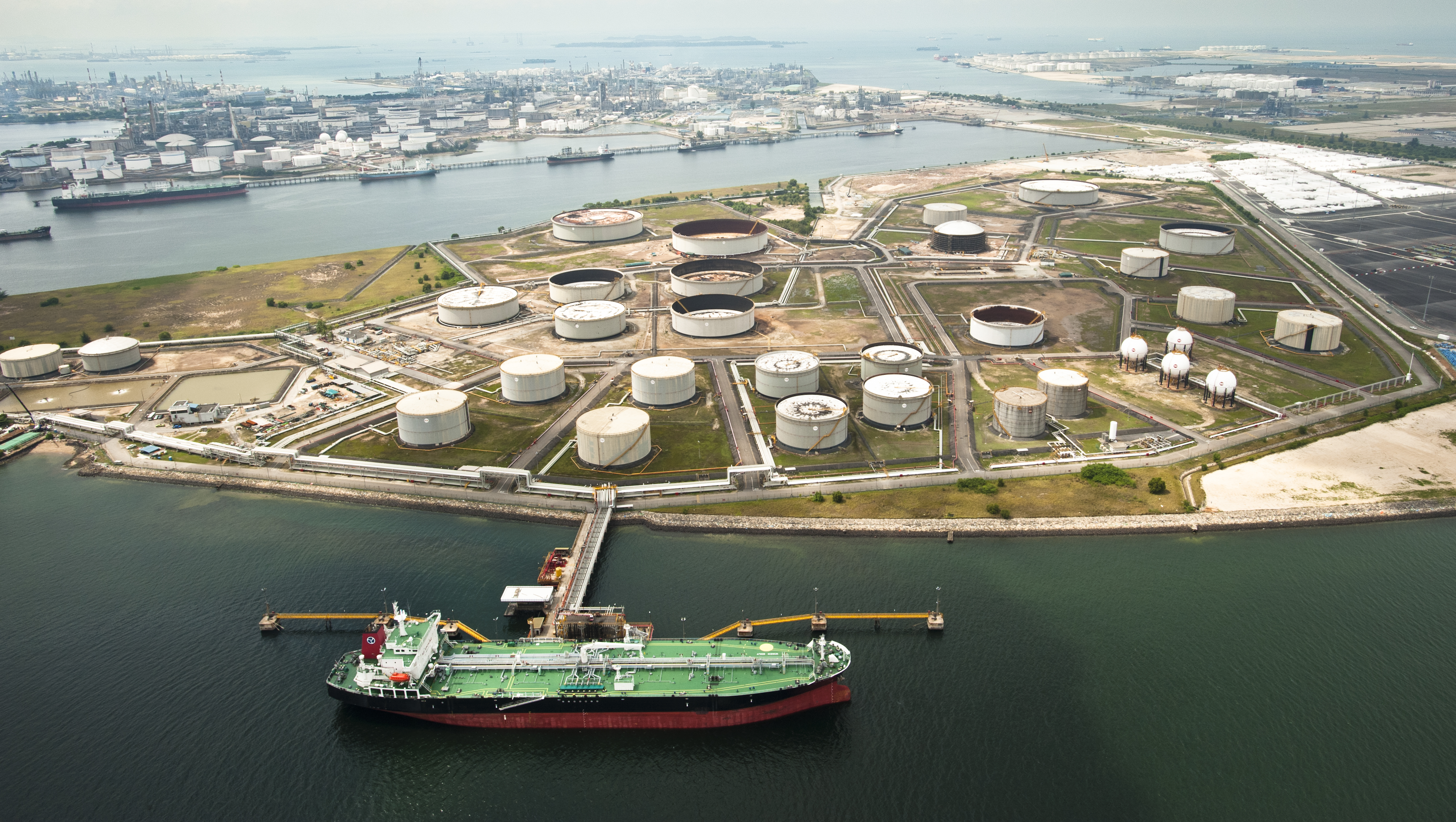
![Oil storage tanks and refinery infrastructure illustrate the vulnerability of African economies to global oil price shocks as the Iran conflict pushes crude prices above $100 per barrel and raises the risk of higher fuel costs and inflation across the continent. [Getty Images]](https://ocdn.eu/pulscms/MDA_/804622331a3601cd5f59846ead3a885a.jpg)
Nigeria and several African oil-producing nations could benefit from a major global supply gap created by escalating tensions in the Middle East, according to Nigeria’s upstream petroleum regulator, which says the continent is increasingly being viewed as a critical alternative source of crude oil and natural gas.
- Africa is emerging as a key alternative oil supplier after an estimated 10 million barrels per day were removed from the global market due to Middle East tensions.
- Nigeria’s oil regulator says declining output in traditional regions such as the North Sea and North America is shifting investor focus toward Africa.
- The Petroleum Industry Act is being credited with reviving investment interest in Nigeria’s oil and gas sector after years of declining upstream spending.
- Major projects, new licensing rounds, and expanded access to seismic data are expected to accelerate exploration and production across Nigeria and other African energy markets.
Speaking at the Offshore Technology Conference in Houston, the chief executive of the Nigerian Upstream Petroleum Regulatory Commission, Oritsemeyiwa Eyesan, said geopolitical tensions linked to the conflict involving the United States, Israel and Iran had effectively removed an estimated 10 million barrels of oil per day from the global market.
The resulting supply disruption, she said, has shifted global attention toward Africa, which holds an estimated 125 billion barrels of crude oil reserves and about 625 trillion cubic feet of natural gas, representing roughly 10% of global reserves.
“Today, we believe that about 10 million barrels have been taken off the market. The question on everybody’s lips is where this deficit will come from,” Eyesan said.
She argued that traditional oil-producing regions, including the North Sea and parts of North America, are facing declining production, leaving Africa as one of the few regions with significant untapped reserves and long-term growth potential.
Eyesan pointed to emerging and established producers such as Ghana, Mozambique, Tanzania, Senegal and Namibia as evidence of the continent’s growing role in global energy markets.
However, she said Africa’s challenge is not the availability of resources but the ability to convert those reserves into commercially viable output through investment, infrastructure and regulatory certainty.
For Nigeria, Africa’s largest oil producer, Eyesan credited reforms introduced under the Petroleum Industry Act with helping to revive investor confidence after years of declining upstream investment.
According to Eyesan, annual investment in Nigeria’s upstream sector had previously fallen from around $15 billion to below $7 billion before the reforms took effect.
She said several large-scale projects have either secured or are nearing Final Investment Decisions, including the Bonga Project operated by Shell plc, the Ubeita non-associated gas development, the HI Gas Project and the Zabazaba-Etan field project, which is expected to unlock about $10.38 billion in investment.
“These are huge projects and a signal that the tide has turned,” she said.
Nigeria has been seeking to reverse years of declining oil production caused by crude theft, pipeline vandalism, underinvestment and regulatory uncertainty. The government has increasingly promoted gas development and offshore exploration as part of efforts to attract foreign capital and stabilise output.
Eyesan said the regulator approved 48 Field Development Plans in 2024 alone, describing the figure as evidence of renewed activity across the industry.
She also disclosed that Nigeria’s ongoing oil licensing round, involving 50 oil blocks and more than 300 competing companies, is expected to conclude by the third quarter of 2026. Another licensing round, she added, is expected to begin before the current one is completed.
To support exploration activity, the commission is expanding its National Data Repository with additional two-dimensional and three-dimensional seismic data through partnerships with private-sector firms. The regulator is also upgrading its systems with advanced analytics and artificial intelligence tools to accelerate asset development and improve investor access to geological data.
Despite growing international pressure on energy transition policies, Eyesan argued that Africa still requires significant investment in oil and gas to address energy shortages and industrialisation needs across the continent.
“The opportunities are immense. The regulatory environment is there,” she said.