Burundi Unveils Major Education Reforms Amid Concerns Over Declining Standards
Planned reforms include curriculum revisions, the reintroduction of Grade 10, improved learning conditions, and the expansion of boarding schools to boost education quality.
 Black News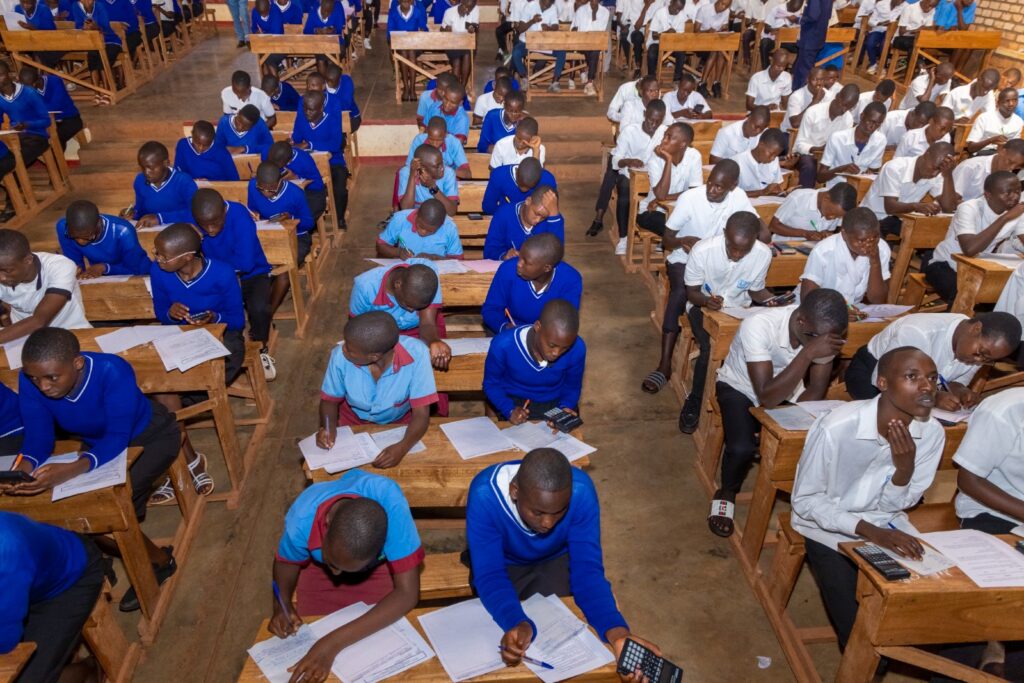
The Burundian government has announced a series of education reforms aimed at improving the quality of learning, as education stakeholders and experts continue to express concern over what they describe as a decline in academic standards following the introduction of the country’s fundamental and post-fundamental education system.
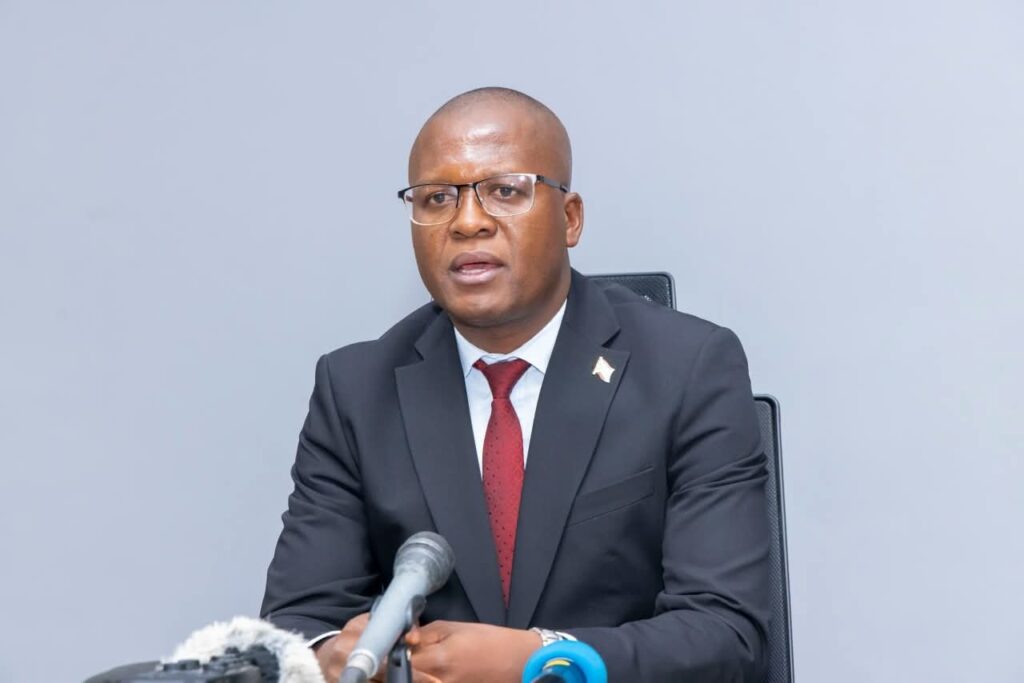
Speaking during a public broadcast on Thursday, Prime Minister Nestor Ntahontuye said reforms are planned for the 2026–2027 school year to address longstanding challenges facing Burundi’s education sector.
“For the next school year, we have revised the curriculum for Grade 7 with the objective of reintroducing Grade 10, because we found that students’ knowledge levels have declined in recent years,” Ntahontuye said. “One of the reasons is that the time required to complete primary and secondary education was reduced from 13 years to 12 years.”
He added that students beginning under the revised curriculum would continue with the new program through Grade 10.
Concerns Over Declining Education Quality
The government’s announcement comes as education organizations continue to criticize the performance of the fundamental and post-fundamental education system introduced in 2013.
Earlier this week, the Education For All Coalition (Bafashe Bige) highlighted several challenges affecting the sector, including a gradual decline in learning outcomes, weaknesses in French and mathematics instruction, reduced teaching hours for key subjects, and redundancies within school curricula.
The coalition is not alone in raising concerns.
The Federation of National Education and Teaching Unions of Burundi(FENASEB) has also criticized the reform, arguing that it has disrupted academic programs and reduced instructional time.
“All school curricula were overhauled, instructional time was reduced, and I even question whether the people who designed these programs possessed the necessary expertise,” said Antoine Manuma, the federation’s chairperson.
Manuma pointed to what he described as curriculum inconsistencies, including the merging of content from different grades and the introduction of French-language mathematics instruction before students have developed sufficient language proficiency. He also argued that English lessons taught in Grades 5 and 6 often exceed students’ abilities.
He further criticized the introduction of science and technology courses, saying they occupy a significant share of classroom time at the expense of French, the language used for instruction.
Former Education Minister Calls Situation Critical
Former Education Minister Joseph Ndayisaba said the reforms implemented over the past decade have failed to produce meaningful improvements.
“During the Grade 9 national examination and the post-fundamental placement test, it is very rare for pass rates to reach 50 percent of the total score,” he said.
“If the exams truly reflect what students have been taught, candidates should normally achieve at least 75 percent. Otherwise, something is wrong.”
Ndayisaba urged authorities to investigate the causes of poor performance, suggesting that incomplete curricula, inadequate teacher preparation, or other systemic issues may be contributing factors.
“There is clearly a serious problem, and the government must act because the situation is critical,” he warned.
Expansion of Boarding Schools
Among the reforms announced by the prime minister is an expansion of boarding school admissions.
Students who achieve strong results in entrance examinations for elite schools but fall short of the required cut-off scores will be admitted to boarding schools, depending on available capacity, Ntahontuye said.
He pledged that the government would increase boarding school capacity annually, beginning with an additional 5,000 boarding students in the upcoming academic year.
The government also plans to improve learning conditions by providing more desks and classroom furniture.
“For the coming school year, we have planned changes to improve learning conditions,” Ntahontuye said.
University Reforms Also Planned
The reforms will extend beyond secondary education to higher education institutions.
Ntahontuye announced that food services for boarding students at the University of Burundi would soon be reinstated.
“All these reforms are intended to support learners and improve the quality of education for everyone without discrimination,” he said.
The prime minister’s remarks follow comments made last week by André Nduwimana, Head of Fundamental and Post-Fundamental Education Program at the Ministry of Education and Scientific Research.
Nduwimana said an evaluation conducted before the preparation of Grade 7 textbooks for the 2026–2027 school year found that some subjects did not meet students’ needs and that others contained unnecessary repetition.
He acknowledged that reductions in French-language instruction had left many graduates of the fundamental education cycle with weaker language skills than students who completed Grade 10 under the previous system.
“It was found that students finishing the fundamental cycle lack sufficient knowledge, particularly in French, when compared with those who completed Grade 10 under the former system,” he said.
“The same problem can also be observed among students entering university today.”
Despite the planned reforms, Burundi’s education sector continues to face numerous challenges, including teacher attrition, shortages of teaching materials, overcrowded classrooms, and an insufficient number of teachers.
While the government says it has recruited additional teachers during the current academic year, education stakeholders argue that more comprehensive measures will be required to address the sector’s deep-rooted problems and reverse the decline in learning outcomes.