It costs more to ship from Lagos port to Accra than from Spain to Lagos - Dangote
Africa’s richest man, Aliko Dangote, has said it is often more expensive to ship goods from Lagos to Accra than from Spain to Nigeria.
 Black News

Africa’s richest man, Aliko Dangote, has said it is often more expensive to ship goods from Lagos to Accra than from Spain to Nigeria.
- Aliko Dangote says that shipping within Africa, such as from Lagos to Accra, is often more expensive than shipping from Europe to Africa.
- He points to structural barriers like weak transport systems and fragmented trade corridors as obstacles to intra-African commerce and economic integration.
- His Dangote Group operates in 17 African countries, dominating cement production and expanding with significant investments in cement, oil refining, and fertiliser sectors.
- Dangote argues that only by removing barriers to the free movement of goods, services, and people can Africa achieve greater economic integration and prosperity.
Africa’s richest man, Aliko Dangote, has said it is often more expensive to ship goods from Lagos to Accra than from Spain to Nigeria, stressing the deep inefficiencies that continue to weigh on intra-African trade.
Speaking in an interview with Makhtar Diop, Managing Director of the International Finance Corporation, Dangote highlighted the structural barriers that still make regional commerce difficult, from weak transport systems to fragmented trade corridors.
“It costs more to ship from Lagos port to Accra than from Spain to Lagos,” he said, pointing to the high cost of moving goods within the continent compared to international routes.
“There’s no way you can do trade with your neighbours like this,” he added. “When we look at the transportation sector, most of the people who own ships that move goods around are not Africans.”
Dangote said the lack of seamless movement of goods, services, and people remains one of the biggest obstacles to Africa’s economic integration.
“Somebody like myself, I need 38 visas to move around. How do I invest now if I’m not able to move around? It doesn’t make sense. Nobody has time to keep applying for visas.”
“Without this, there’s no way we are going to have a very prosperous Africa,” he said. “I cannot move my goods from Lagos to the Republic of Benin, and when you try to cross the border, you can be there for a week—if you are lucky.”
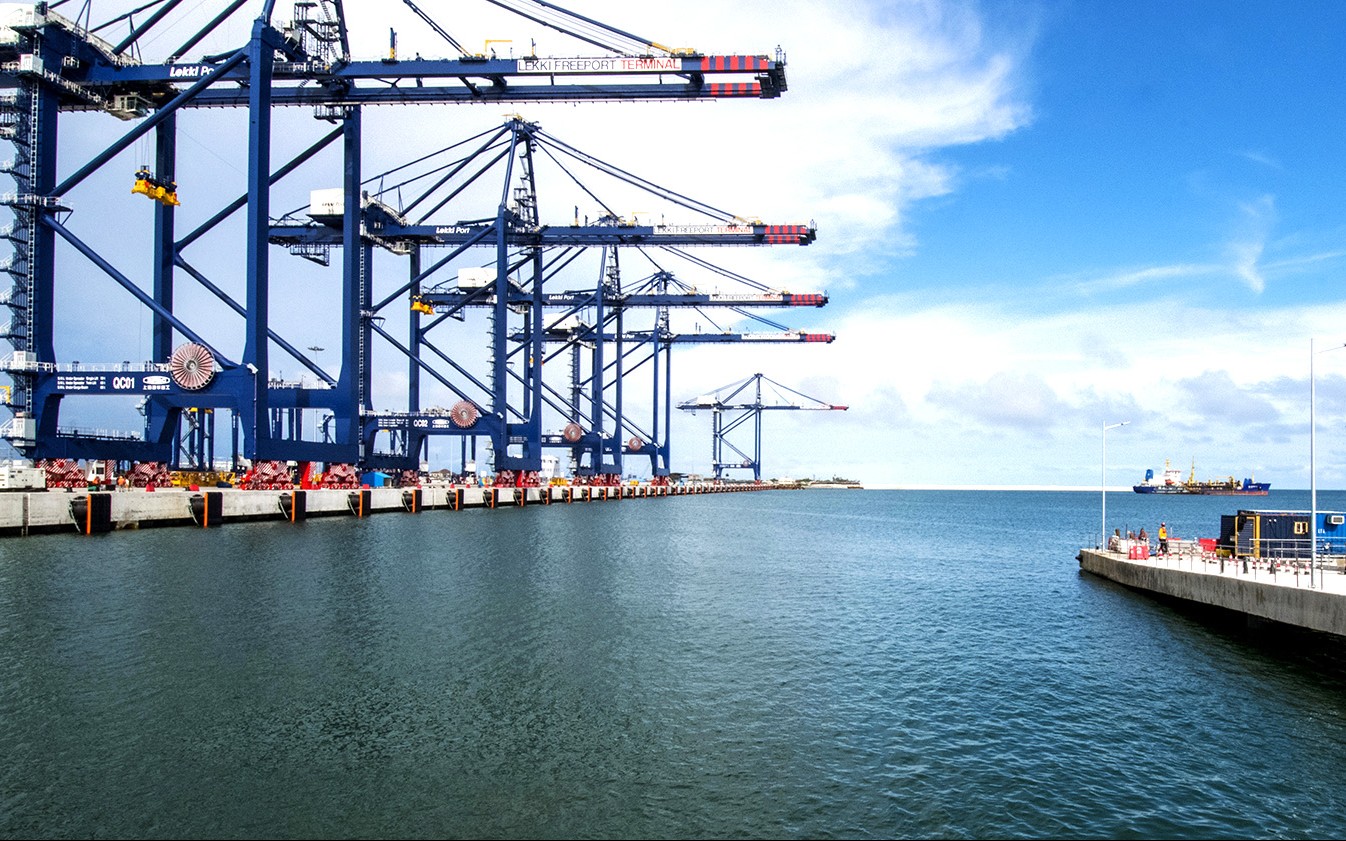
Industrial push across Africa
Dangote leads the Dangote Group, which operates across cement, fertiliser, and oil refining. The group has a presence in 17 African countries and is a dominant force in cement production across the continent.
Its cement arm, Dangote Cement, operates in 11 African countries and generated more than $3 billion in revenue in 2025. The company has launched an ambitious expansion programme, including a $1 billion investment plan over the next four years to increase capacity from about 55.17 million tonnes to 80 million tonnes.
Beyond cement, Dangote’s industrial footprint is anchored by the $20 billion Dangote Petroleum Refinery and Petrochemicals, one of the world’s largest single-train refineries. The facility has a refining capacity of 650,000 barrels per day and is currently undergoing an expansion to increase output to about 1.4 million barrels per day, a move expected to significantly boost Nigeria’s fuel self-sufficiency and regional energy supply.
He also leads the Dangote Fertiliser complex, one of the largest in Africa, designed to reduce the continent’s dependence on imported fertiliser and strengthen agricultural productivity.
Dangote said these investments only make sense if Africa addresses its structural trade barriers. “Free movement of people, free movement of goods and services, these are critical areas,” he said.